
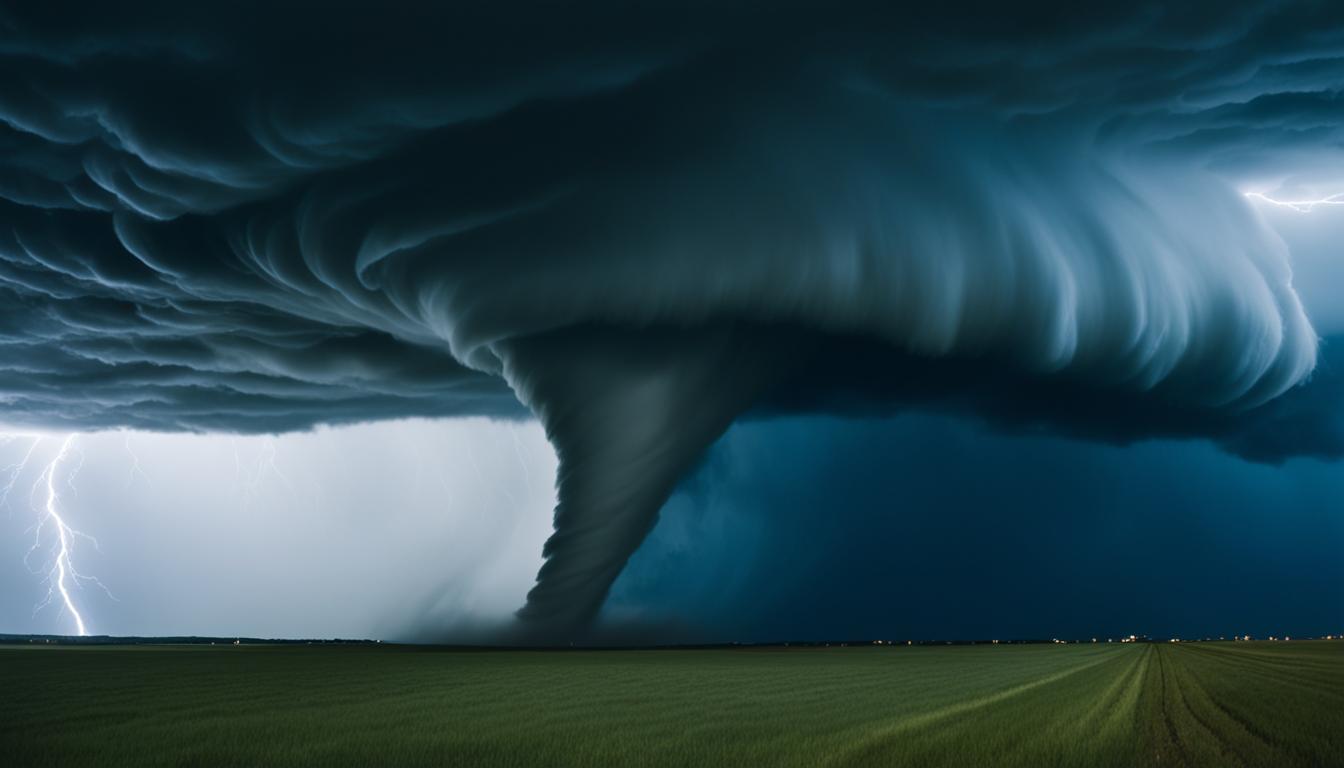
Get ready to be amazed by these 10 mind-blowing facts about extreme weather. We’ll cover everything from scorching temperatures to devastating tornadoes. Prepare to be awed by the sheer force and drama of Earth’s extreme weather.
Extreme weather can both fascinate and frighten us. It shows the raw power of our planet. From record-breaking hailstones to the world’s fiercest tornadoes, nature surprises and amazes us.
In this article, we’ll explore 10 incredible facts about extreme weather. These facts will deepen your appreciation for the wonders and dangers of our dynamic climate.
What is Extreme Weather?
Extreme weather means unusual, severe, or unseasonal weather that’s not normal. It includes heat waves, cold snaps, droughts, floods, hurricanes, tornadoes, and blizzards. These types of extreme weather can greatly affect people, buildings, and nature.
Defining Severe Weather Conditions
Severe weather conditions are dangerous and can harm people, property, or the environment. They include high winds, heavy rain, extreme heat, and other unusual weather. Knowing about extreme weather helps us stay safe and prepared.
Examples of Extreme Weather Events
Examples of extreme weather events are heat waves, cold snaps, droughts, floods, hurricanes, tornadoes, blizzards, and ice storms. These events can be very harmful, affecting our daily lives and causing damage. It’s important to keep up with the weather and be ready for these severe weather conditions.
The World’s Hottest Temperature
In Death Valley, California, the world saw extreme heat. On July 10, 1913, the temperature hit 156°F (69°C) at Furnace Creek Ranch. This is the highest air temperature ever recorded.
This record shows the power of extreme weather. The heat in Death Valley is a reminder of nature’s strength. It shows how life can survive in harsh conditions.
Extreme heat can harm humans and nature. But it also shows how diverse and strong life is. As we face a changing climate, learning from these events helps us prepare for the future.
Mind-Blowing Hailstone Records
Hail, the frozen bits that fall from the sky, can get really huge. The biggest hailstone ever found weighed almost 2 pounds (0.9 kg). It fell in Vivian, South Dakota, on July 23, 2010. This hailstone was a whopping 8 inches (20 cm) wide, breaking all previous records.
Events like this show how powerful nature can be. Hailstones form when storms lift water droplets up high into the cold air. There, they freeze into ice balls. These ice balls can get bigger as they fall, adding more ice layer by layer. The largest hailstone ever found is a clear sign of nature’s extreme weather.

Such huge hailstones are rare but remind us of nature’s power. They can damage buildings, cars, and crops. So, it’s key to be ready for these extreme weather events. By learning about hailstone formation, we can better understand the amazing things that happen in our skies.
Tornado Twists and Turns
Tornadoes are among the most captivating and powerful weather phenomena on the planet. These swirling vortices of wind can wreak havoc, leaving behind a trail of destruction. One tornado, the “Tri-State Tornado,” stands out as the strongest ever recorded.
Strongest Tornado on Record
The Tri-State Tornado tore through Missouri, Illinois, and Indiana in 1925. It was a record-breaking tornado with winds up to 318 mph (512 km/h). This makes it the strongest tornado ever documented.
This tornado showed the raw power of nature. It destroyed buildings and threw debris for miles. The Tri-State Tornado was a sobering reminder of the importance of being prepared for extreme weather.
While tornadoes are unpredictable, understanding the risks helps us prepare. Taking precautions can lessen the impact of these powerful storms.
Fun Facts About Extreme Rainfall
Extreme weather events, like record-breaking rainfall, show the power of nature. Heavy rain can cause floods, damage buildings, and disrupt life. Yet, there are interesting facts about the world’s most extreme rainfall that might surprise you.
Heaviest Rainfall in a Single Day
The highest 24-hour rainfall ever recorded was in Cilaos, Réunion, in 1952. During Tropical Cyclone Hyacinthe, a massive 71.8 inches (1,825 mm) of rain fell. That’s almost six feet of rain in just one day, much more than most places get in months.
Events like this show how powerful nature can be. As climate change makes heavy rain more common, knowing what’s possible helps us prepare. This knowledge is key to protecting communities from the worst of record-breaking rainfall.
Blizzard Blunders and Wonders
Blizzards bring heavy snow, strong winds, and freezing temperatures. The “Great Blizzard of 1888” was one of the worst, hitting the northeastern U.S. hard and taking hundreds of lives.
This storm dumped up to 50 inches of snow and had winds over 45 miles per hour. Snowdrifts reached over 40 feet, trapping people in their homes. They were left without heat or food, showing the danger of such storms.
Despite the dangers, blizzards can also amaze us. In 2016, a blizzard in New York City set a record for snowfall in just 24 hours, with 26.8 inches. This event showed the power of nature and the surprise it can bring.
As the climate changes, blizzards might become more common and intense. It’s important to be ready for these storms and know how they work. This helps keep us safe during extreme winter weather.
Hurricanes: Nature’s Powerful Storms
Hurricanes are among the most awe-inspiring and destructive natural events on Earth. These massive storms can bring heavy rains, strong winds, and huge storm surges. These can destroy entire regions. Hurricanes happen often in many places, but they’re getting stronger and more frequent because of climate change.
Strongest Hurricane Ever Recorded
Hurricane Wilma was one of the most powerful hurricanes ever. It hit the Caribbean Sea and the Gulf of Mexico in 2005. At its strongest, Wilma had winds of 185 mph (298 km/h). This made it one of the strongest hurricanes ever recorded.
The winds of Wilma were incredibly powerful. They were as strong as a Category 5 hurricane, causing massive damage.
Even with better weather forecasting and emergency plans, hurricanes still threaten communities. Climate change is making hurricanes more intense and common. We must stay alert, listen to weather experts, and act quickly to save lives and property when storms come.
Fun Facts About Lightning Strikes
Lightning is a truly remarkable and awe-inspiring natural phenomenon. Did you know the longest recorded lightning strike was over 440 miles (709 km) long in Brazil in 2018? This broke the previous record, showing the power of these electric discharges.
Lightning isn’t just long; it can also be incredibly intense. In 2020, a lightning bolt in Uruguay reached 48 million volts. This makes it one of the most powerful lightning strikes ever recorded. These events show the huge energy and force in thunderstorms.
Lightning also has fascinating scientific secrets. Researchers found that lightning can help create new life. The intense heat and electrical charge can make complex organic molecules. So, lightning plays a key role in our planet’s evolution.
Whether you’re amazed by their size and power or interested in their science, lightning strikes are captivating. They range from record-breaking bolts to helping new life grow. These natural events always amaze and inspire us.
Dust Storms and Their Impacts
Dust storms are powerful natural events that affect the environment and people. These storms create huge clouds of sand and dust that can go for hundreds of miles. They block the view and make conditions dangerous.
World’s Largest Dust Storm
The “Black Blizzard” in the 1930s was one of the biggest dust storms ever. It hit the central United States and Canada during the Dust Bowl. This storm covered a huge area, causing a lot of damage and trouble.
Now, dust storms are still a big worry in many places around the world. They can cause breathing problems, harm crops, and mess with transport and buildings. It’s important to know how these storms work to find ways to deal with them.

Wildfires: Fascinating Fun Facts
Wildfires are extreme weather events that can cause a lot of damage. The “Great Fire of 1910” was one of the worst, burning three million acres across Washington, Idaho, and Montana. It also took the lives of 87 firefighters. These fires remind us of the huge power and destruction that extreme fires can bring.
Not all wildfires are caused by humans or climate change. Some are natural, helping to clear dead plants and make way for new ones. But, wildfires are happening more often and getting worse. Climate change and other factors are making fires more intense.
Lightning can start many wildfires. When lightning strikes, it can make dry plants catch fire easily. This shows how different weather events can work together to make things worse.
Dealing with climate change and more extreme weather means learning about wildfires. Knowing about their science and history helps us find ways to prevent and fight them. By understanding wildfires better, we can get ready for the challenges they bring.
Preparedness and Safety Tips
Being ready for extreme weather can save lives. Start by keeping up with the latest weather news and alerts in your area. Learn the warning signs for severe weather like heavy rain, strong winds, or lightning. Make an emergency plan for your family, including where to meet and who to call.
Put together an emergency kit with important items like food, water, first-aid supplies, and a backup power source. Think about getting weather-proof upgrades for your home, like windows that can withstand storms or a generator. If a weather emergency happens, listen to local authorities and do what they say. Find a safe place to go and don’t travel unless you have to.
By getting ready and staying alert, you can greatly increase your chances of staying safe during extreme weather. Remember, being informed, having a plan, and taking steps to protect yourself and your family are key. This way, you can face the storm with confidence.