
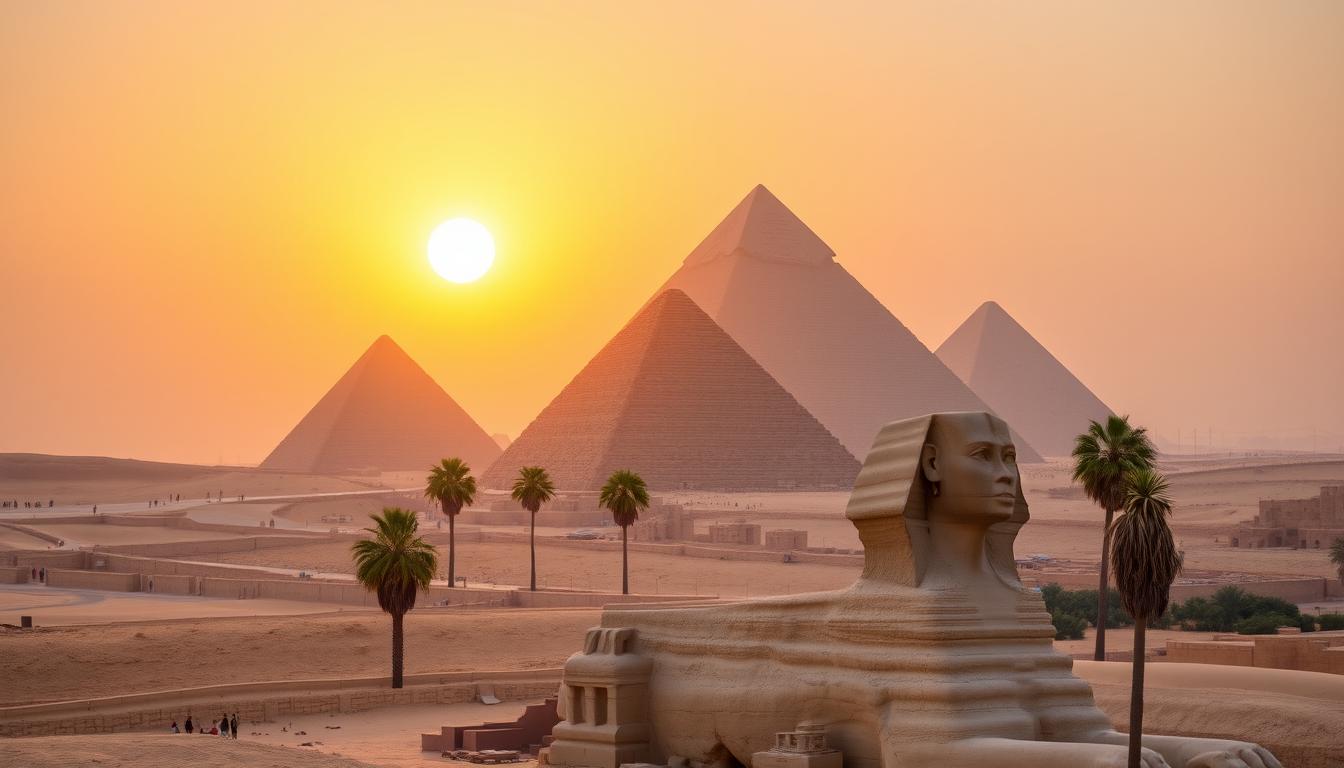
Start your adventure by exploring Egypt’s historical sites. Discover the wonders of ancient Egyptian architecture. The Great Pyramid of Giza and the majestic Sphinx highlight Egypt’s grand legacy.
If ancient monuments fascinate you, get ready for an amazing journey. You’ll see incredible temples and tombs. They showcase the lasting impact of a civilization that has intrigued people worldwide for thousands of years.
Introduction to Egypt’s Ancient Wonders
Welcome to Egypt’s majestic world, rich in history and mystery. This ancient land showcases mankind’s genius from thousands of years ago. Egypt’s landmarks mix myth, religion, and history. This makes Egypt a top choice for exploring history.
We will explore pharaonic monuments, showcasing ancient people’s ingenuity and splendor. These amazing structures still fascinate many, bringing them into a world full of secrets and stories.
Every site has its own story, like the Great Pyramid of Giza and the mysterious Sphinx. They show the lasting impact of Egyptian civilization. Studying these places helps us understand ancient life, making Egypt even more inviting for history lovers.
Join us on a journey back in time to see Egypt’s awe-inspiring ancient wonders. We’ll see magnificent temples, grand statues, and beautiful Nile landscapes. Egypt’s ancient treasures are waiting for you.
The Great Pyramid of Giza
The Great Pyramid of Giza is the oldest and most intact of the Wonders of the ancient world. It amazes visitors with its size and historical importance. This pyramid is Pharaoh Khufu’s eternal resting place, showing the peak of pyramid construction. It stands as a key symbol of ancient Egypt.
It’s located in the big Giza Necropolis. This huge structure has lasted through time and puzzled many historians and engineers. The way it was built, aligning almost exactly with true north, is still a mystery to experts today.

There are many interesting stories about the Great Pyramid. Some people talk about a mythical curse to protect the pharaohs’ rest. The pyramid was made with millions of limestone blocks, each weighing tons. This shows the incredible skill of ancient Egyptian builders.
The Giza Necropolis lets us peek into the pharaohs’ world, with the Great Pyramid as its most stunning piece. Visiting this amazing place gives us a unique look at the architecture and spirit of one of the greatest ancient civilizations.
The Sphinx: Guardian of the Giza Plateau
The Sphinx stands proudly in the Giza Plateau’s sands. This limestone giant has puzzled many over the years. It guards Egypt’s ancient treasures in silence.
Many debate over why and how the Sphinx was built. Some think it symbolizes strength and wisdom, others feel it was a guardian for the pyramids. New discoveries keep shedding light on its ancient role.
The Sphinx greatly influences our cultural memory and imagination. As we learn more, it keeps inspiring wonder and curiosity. It remains a steadfast guardian of history and hidden tales.
Temple of Karnak: A Testament to Ancient Worship
The Temple of Karnak is a marvel of ancient architecture in Egypt’s deep history. It honors a group of gods, with Amun-Ra at the forefront.

It was built across many dynasties, showing the peak of worship for Amun-Ra. Its Hypostyle Hall, with towering columns, is truly impressive. Each part of the temple, like pylons and obelisks, displays Egypt’s deep commitment to their gods.
The design and building of the Temple of Karnak reveal brilliant architecture and deep religious importance. In the Hypostyle Hall and beyond, intricate carvings and inscriptions tell us about ancient rituals. They give us a peek at how people once celebrated Amun-Ra.
Luxor Temple: The Heart of Ancient Thebes
Discover the heart of ancient Thebes with a visit to the majestic Luxor Temple. This temple showcases the era’s genius with massive statues and high columns. It shows the creativity that marks our understanding of Pharaonic heritage. Important events like the Opet Festival were key to ancient Egyptian culture’s liveliness.
The path leading to the temple is lined with Sphinxes. It shows the temple’s grandness. This road connected Luxor Temple to Karnak Temple, underlining its role in royal and religious events. In the Opet Festival, gods’ statues were carried here. This showed the pharaoh’s godly side and revitalized the nation’s spirit.
Luxor Temple’s architecture and cultural aspects give us a deep look into ancient Thebes’ legacy. Its beauty and the ceremonies it hosted are a nod to ancient Egyptian society’s lasting strength and spirituality. Understanding this site helps us see into pharaohs’ lives and the lasting impact of Pharaonic heritage.
Abu Simbel: Ramses II’s Monumental Legacy
The temples of Abu Simbel are amazing examples of Pharaoh Ramses II’s ambition and skill. Located near the Sudan border, these structures show us the beauty of rock-cut architecture carved into a mountain.
Abu Simbel is known for its incredible solar alignment. Twice each year, the sun lights up the inner sanctuary. It highlights statues of Ramses II and gods. This shows the Pharaoh’s supposed divine status through an architectural feat.
In the 1960s, the Aswan High Dam’s construction almost flooded Abu Simbel. A huge international project saved the temples by moving them up. Now, people from all over come to see Ramses II’s legacy in the stunning rock-cut architecture of Abu Simbel.
The Valley of the Kings: A Royal Burial Ground
In the desert’s quiet, the Pharaonic necropolis known as the Valley of the Kings reveals ancient Egypt’s grand past. Near Luxor, it served as the final resting place for pharaohs and nobles, guiding them to the afterlife. Each tomb here is a doorway to another realm.
Tutankhamun’s tomb shines brightest amongst these, opened by Howard Carter in 1922. This tomb shared a wealth of artifacts, paintings, and relics, ensuring the young pharaoh’s passage to the afterlife. The symbols and art inside reveal the deep afterlife beliefs of ancient Egyptians.
Over 60 tombs fill the Valley of the Kings, each with detailed inscriptions and mummies, highlighting ancient Egyptian afterlife views. Their mummification and richly decorated tombs show how Egyptians celebrated and remembered their dead.
Walking through this legendary Pharaonic necropolis uncovers the intricate rituals and artistry of Egypt’s funerary customs. It’s a stirring glimpse into a culture’s eternal bond with the spiritual world, showcasing their pursuit of the everlasting.
The Temple of Hatshepsut: A Queen’s Tribute
The Temple of Hatshepsut sits proudly at Deir el-Bahari. It shows the vision and power of Egypt’s longest-serving female pharaoh. This mortuary temple combines innovative architecture with the cliffs around it, creating a beautiful mix of nature and human creation.

The temple’s design is one of a kind in ancient Egypt, with terraced levels linked by ramps. This design was groundbreaking during Hatshepsut’s time. The way the temple blends with the cliffs at Deir el-Bahari showcases the brilliant architecture of the past.
At the temple, we see Hatshepsut’s story in the detailed reliefs on the walls. These artworks tell us about her life and her successful trade missions. They celebrate her time as pharaoh, keeping her legacy alive.
The Temple of Hatshepsut is a lasting symbol of a leader who was ahead of her time. With its grand design and impressive reliefs, it’s a place everyone interested in ancient Egypt should see. It reminds us of the achievements of a remarkable ruler and the architectural skill of her era.
The Colossi of Memnon: Giant Statues of the Pharaoh
The Colossi of Memnon are giant guardians of ancient Egypt. They showcase the time when huge structures were made to honor the pharaohs. These statues show Pharaoh Amenhotep III and were placed to guard his mortuary temple near Luxor, by the Nile.
The stories behind these giant statues are fascinating. They are known for their size and splendor. The statues of Amenhotep III are linked to unique legends, too. People from Greece and Rome loved a phenomenon called Memnon’s song. They said one statue would make music at dawn, creating a mystical feeling around them.
The “singing” was believed to be caused by sunrise heat and stone-drying dew. But, it’s not just the size or the sounds that draw people. The legends of natural disasters and repairs through the ages also keep the Colossi’s legend alive.
Visitors today can still admire these ancient sentinels. They remind us of ancient Egypt’s great skill and artistry. The Colossi of Memnon, with legends like Memnon’s song, continue to be a source of wonder and curiosity.
The Mortuary Temple of Ramesses III
The Mortuary Temple of Ramesses III at Medinet Habu showcases the power and skill of ancient Egypt. It’s a place where spiritual and defensive designs meet, showing the challenges of Ramses III’s era. This temple tells a story of a time when might and faith ruled.

The entrance to the Medinet Habu temple is grand, with huge towers and thick walls for protection. Inside, there’s a vast sprawl of courtyards, halls, and holy areas. Each is covered in detailed carvings that tell the tales of Ramses III’s battles.
The temple’s carvings are breathtaking. They show Ramses III’s fights, his victories, and how he beat enemies. These artworks did more than honor the gods. They were meant to make Ramses III’s battle skills unforgettable.
For those who love history, the Medinet Habu temple is a must-see. It offers a deep dive into ancient Egyptian life, showing their religious beliefs and war tactics. The temple’s strong walls and beautiful carvings are lasting tributes to Ramses III’s legacy.
Aswan High Dam: Modern Engineering Meets Ancient History
The Aswan High Dam is a marvel of modern engineering that connects the past and present of Egypt. It sits on the Nile River and has changed Egypt since it was finished in 1970. But its building led to the Aswan Dam controversy, which is still talked about today.
“One of the most pressing concerns was the fate of irreplaceable Nubian monuments threatened by the dam’s vast reservoir. An international coalition embarked on extensive Nubian salvage operations to relocate these historical treasures to higher ground, safeguarding them for future generations.”
The dam has helped save precious ancient artifacts. It also boosted hydroelectric production in Egypt. Thanks to the Nile’s power, Egypt has a steady source of clean energy. This has helped the country grow and develop.
The debate over the Aswan Dam continues, mainly because of the changes it brought. It changed the Nile’s flow, affecting the ecosystem and farming practices. Even with these issues, efforts to save Nubian monuments and improve energy production show Egypt balancing its past and future.
The Nile River: Lifeblood of Ancient Civilization
The Nile River, over 4,000 miles long, was crucial to ancient Egypt. It provided food, a way to move, and helped the economy. Thanks to the *fertile floodplains*, it supported farming in a dry area. Each year, the river brought soil that was full of nutrients. This made the land great for crops and helped a great civilization grow.
The *Nile in antiquity* played a big role, as shown by old finds. It helped move huge stones for the pyramids and made trading easy. This helped create one of the most amazing societies in history.
The Nile was also very special in *Egyptian mythology*. People thought of it as a gift from the gods, like Hapi, the fertility god. It was important in religious events. Many sacred places and writings showed love for the river. Rituals by the river were done to keep the gods happy, making sure this important resource stayed.
The Nile’s effect on ancient Egypt was huge. It was key for farming, moving things, and the economy. It was also a big part of *Egyptian mythology*, making it sacred. The river’s story keeps going in history, just like its never-ending flow.
Conclusion: Preserving Egypt’s Ancient Legacy
Egypt’s ancient monuments are more than just stone. They are guardians of our past, speaking volumes about ancient life. These structures show how much the Egyptians achieved in art, architecture, and governance. Today, Egypt takes great care in preserving these precious pieces of history. This work involves advanced technology and teams from around the world.
Tourism helps Egypt pay for these preservation efforts. Yet, it also brings challenges to keeping these sites safe. Egypt is now focusing on responsible tourism. This encourages visitors to enjoy these wonders while being mindful of their impact. By choosing sustainable ways to travel, tourists help protect Egypt’s history.
Studying ancient cultures teaches us about the journey of humanity. In Egypt, digging into the past is crucial for keeping their heritage alive. The discoveries from these studies shape how conservation is done. They help ensure that future generations can marvel at these sites, just as we do today. Protecting these historic gems is a duty we all share.