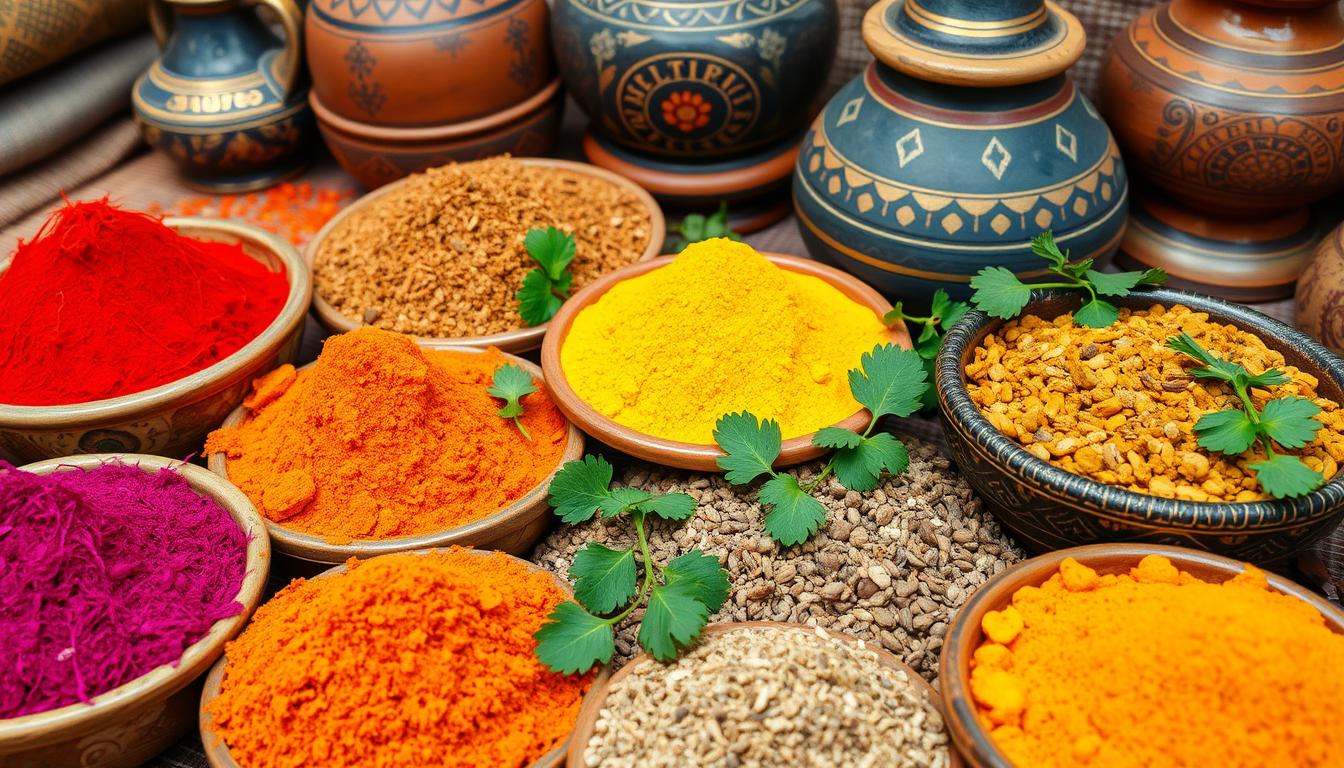
Middle Eastern cooking is known for its rich flavors and aromas. This is thanks to the wide range of arabic spices, persian spices, and middle eastern spices used. Each spice is important for making the region’s dishes unique.
Spices like cinnamon and cardamom add warmth. Sumac brings brightness, while saffron adds depth. Knowing these spices is essential for bringing out the best in your dishes. This guide is for both seasoned chefs and beginners looking to explore Middle Eastern spices.
Discovering arabic spices, persian spices, and middle eastern spices is an exciting adventure. With this guide, you’ll learn how to make delicious, authentic Middle Eastern dishes. Let’s start exploring the flavors and aromas of this region’s cuisine.
Understanding Middle Eastern Spices
The world of Middle Eastern spices is incredibly diverse. Each country and region has its own spice blends and traditions. For example, Turkish spices are key in dishes like kebabs and stews. Arabic spices, on the other hand, might include baharat, used in meats and vegetables.
Knowing these spice traditions is key to making authentic Middle Eastern dishes. Middle Eastern spice mixes are essential for adding depth of flavor. They combine different spice blends to create complex, aromatic flavors typical of Middle Eastern cooking.

In Middle Eastern cooking, turkish spices and middle eastern spice mixes add flavor to stews, soups, and salads. Spice blends are also used to flavor meats, vegetables, and grains. By learning about these spice blends and middle eastern spice mixes, cooks can make dishes that are both authentic and delicious.
The art of blending spices is a cornerstone of Middle Eastern cuisine, and is passed down from generation to generation. By mastering the art of blending spice blends and middle eastern spice mixes, cooks can create dishes that are truly authentic and delicious.
Key Spices in Middle Eastern Cooking
Cooking with spices is key in Middle Eastern cuisine. Saffron, with its yellow color and earthy taste, is a luxury. It’s used in special dishes like paella and biryani, bringing saffron benefits to the table. It’s a main ingredient in many middle eastern recipes.
Cinnamon adds a warm, sweet flavor to both sweet and savory dishes. It’s a must in many middle eastern recipes. Turmeric, with its bright yellow and slightly bitter taste, is great in curries and stews. It’s also good for health, making cooking with spices like turmeric nutritious and tasty.

Learning to use these spices is essential for mastering Middle Eastern cuisine. Adding saffron, cinnamon, and turmeric to your cooking can make your dishes delicious and true to the middle eastern recipes tradition. This way, you can enjoy the unique flavors and saffron benefits of this amazing cuisine.
Exploring Middle Eastern cooking? Remember, the right spices are vital for flavor and authenticity. With saffron, cinnamon, and turmeric, you’ll create dishes that impress and are true to the middle eastern recipes tradition.
Exploring the World of Saffron
Saffron is known as the luxury spice. It adds a unique flavor and color to dishes. It’s packed with antioxidants and may boost brain health.
In cooking, saffron gives a subtle earthy taste. It also makes dishes like risottos and paellas bright yellow.
Saffron is a key ingredient in saffron recipes like paella. It brings a special flavor and aroma. In Middle Eastern and Indian dishes, saffron is prized for its taste and health perks.
As a luxury spice, saffron is used sparingly. Yet, its unique taste and health benefits make it a great addition to meals.

For those new to saffron, there are many saffron recipes online. You can find simple dishes like saffron rice or complex meals like saffron-infused curries. Saffron’s unique flavor and health benefits make it a luxury spice worth trying.
As the most expensive spice in the world, saffron is a valuable addition to any meal. It offers a unique flavor and numerous health benefits, making it a worthwhile investment for any food lover.
The Role of Cinnamon in Middle Eastern Cuisine
Cinnamon is a key spice in Middle Eastern cooking, loved for its warm taste and cinnamon health benefits. It’s used in both sweet treats and savory dishes. In traditional cooking, cinnamon is often mixed with spices like cardamom and cloves for a rich flavor.
Cinnamon adds depth and warmth to food without taking over other tastes. It’s perfect in cinnamon recipes like baklava and ma’amoul. It’s also great in stews and braises, adding a comforting touch.

Cinnamon is not just good for taste; it’s also good for you. It has anti-inflammatory properties and may help with heart health by lowering blood sugar and improving circulation. Cinnamon is a must-have in Middle Eastern cooking, inspiring new flavors with its warm spices.
Cinnamon has been a favorite in Middle Eastern cooking for centuries. Its health benefits and versatile taste make it a staple in many dishes.
Tasting Turmeric
Turmeric, known as the golden spice, has been a key part of Middle Eastern cooking for centuries. Its bright yellow color and special taste make it a favorite in many dishes. These include curries, stews, rice dishes, and salads. The turmeric health benefits are many, thanks to curcumin’s anti-inflammatory and antioxidant effects.
Exploring turmeric recipes opens up a world of flavors. Turmeric adds a slightly bitter, earthy taste to various dishes. In Middle Eastern cooking, it’s often mixed with spices like cumin and coriander. This mix creates a rich, aromatic flavor. Turmeric is great in traditional recipes and as a health supplement, thanks to its taste and turmeric health benefits.
Turmeric is a must-have spice in many Middle Eastern dishes. Its turmeric health benefits and uses in cooking make it popular worldwide. If you’re looking to spice up your cooking or want to try golden spice, turmeric is a great choice.
Turmeric has been used for centuries and is getting more popular. Its unique taste and health benefits make it a staple in many cuisines.
The Spice Blend Phenomenon
Spice blends are key in Middle Eastern cooking, bringing out flavors that single spices can’t. Traditional mixes like baharat and ras el hanout are used in many dishes. They add taste to meats, veggies, and grains.
By making your own spice blends, you can match flavors to your liking. It’s a fun way to improve your cooking. You can add warmth to stews or flavor to grilled meats with middle eastern spice mixes.
When trying out spice blends and blend recipes, focus on balancing flavors and aromas. Feel free to mix and match spices to find your perfect blend. With practice, you’ll soon be making your own tasty spice blends and exploring middle eastern spice mixes.
By mastering the art of creating your own spice blends, you’ll be able to add a new level of depth and complexity to your cooking, and explore the rich flavors of the Middle East.
The Influence of Chili Peppers
Chili peppers are a big deal in Middle Eastern food, like in Turkey and the Levant. They add a spicy kick that goes well with other spices. Chili pepper health benefits include lots of vitamin C and antioxidants, which are good for you.
In Middle Eastern cooking, chili peppers are used in many ways. They’re in spicy stews, kebabs, salads, and dips. Whether fresh, dried, or powdered, they add flavor and heat. Spicy dishes are a big part of Middle Eastern food, and chili peppers are key.
Chili peppers make Turkish kebabs and Lebanese salads taste amazing. They’re also in spicy stews and soups. Their health benefits and cooking versatility make them a staple in Middle Eastern food.
Chili peppers are a great way to add flavor and heat to dishes, and their numerous health benefits make them a great addition to a healthy diet.
Adding chili peppers to your cooking can make meals more exciting. With their health benefits and cooking uses, it’s easy to see why they’re popular in spicy dishes and chili pepper recipes.
Fresh Herbs vs. Dried Spices
In Middle Eastern cooking, the debate between fresh herbs and dried spices is ongoing. Fresh herbs like parsley, cilantro, and dill add a bright, fresh flavor. They are also rich in vitamins and antioxidants. Proper herb and spice storage is key to keep their flavor and nutritional value.
Dried spices, on the other hand, last longer and can be just as flavorful as fresh ones. They are great when used correctly.
Fresh herbs are full of nutrients and offer many health benefits. But dried spices also have their advantages. They last longer and are easier to use. The choice between fresh vs. dried depends on your preference and the dish you’re making.
Knowing how to use and store both fresh herbs and dried spices can improve your cooking. By understanding their unique qualities and benefits, you can make delicious Middle Eastern dishes. These dishes will show the best of both worlds.
By combining fresh herbs and dried spices, you can add depth and complexity to your cooking. This way, you can create dishes that are truly greater than the sum of their parts.
Whether you like the fresh taste of herbs or the rich flavor of dried spices, proper herb and spice storage is essential. By learning about different options and how to use them, you can elevate your cooking. This will help you make delicious, memorable meals.
Tips for Storing Your Spices
Proper spice storage is key to keeping flavors and freshness of your spices. Whether it’s dried spices, fresh herbs, or spice blends, storage matters a lot. Store them in cool, dark places to avoid losing flavor due to light and heat.
Airtight containers are a must for keeping spices fresh. They prevent moisture and other flavors from getting in. Organizing your spices makes cooking easier. You can use a spice rack or a categorized system to find spices quickly.
By following these tips, your spices will stay flavorful. They’ll be ready to make your dishes even better whenever you need them.