Indian cuisine is famous for its rich use of spices. These spices range from mild to very spicy. They are key to the flavor of Indian dishes.
Choosing the right spices can be hard for beginners. But, knowing the different spices and how they mix can help. This article will guide you through the world of Indian spices. We’ll cover their history, types, and uses. Plus, we’ll share tips for using them in your cooking.
What Are Indian Spices?
Indian spices are key to the country’s food, with many types of spices making dishes rich and varied. The Indian spice market is famous for its wide range of spices. You’ll find common ones like turmeric and cumin, and exotic ones like cinnamon and cardamom. Knowing about spice blends and their uses is vital for anyone into Indian cooking.
The Indian spice market is big, with many spices grown, traded, and eaten all over the country. In the south, spices like black pepper and cinnamon are used a lot. In the north, cumin and coriander are favorites. The variety of Indian spices is amazing, shaped by the country’s history, geography, and cultural exchanges.
New and exciting spice blends are coming out, great for both home cooks and chefs. With Indian food becoming more popular, the demand for quality spices is growing. This is good for the Indian spice market, making it a great time to try out Indian spices.
The art of blending spices is a key part of Indian cooking. The right mix of spices can make a dish go from good to great.
By checking out the different types of spices and spice blends, home cooks can make their dishes more interesting. This also helps the lively Indian spice market. With its rich history, diverse tastes, and endless options, exploring Indian spices is a thrilling adventure.
The History of Indian Spices
India has been a key player in the spice trade for thousands of years. Its rich history of spices has deeply influenced the country’s food culture. The indian spice history shows how important spices are in Indian culture, food, and economy.
The ancient spice trade routes connected India to the world. Spices like turmeric, cumin, and coriander were traded a lot. They were valued for their taste and health benefits. This history shows India’s strategic role in the global spice trade.

As the spice trade grew, Indian food became more diverse. Spices became an art in Indian cooking. Each region developed its own spice mixes and cooking styles. The indian spice history is rich and complex, with many cultures influencing Indian cuisine.
The history of Indian spices is a story of cultural exchange, trade, and culinary innovation. It is a testament to the power of food to bring people together and to create a sense of community and identity.
In conclusion, the history of spices in India is both fascinating and complex. It shows the importance of spices in Indian culture and food. By exploring the indian spice history and the spice trade, we learn about spices’ role in shaping Indian cuisine and identity.
Essential Spices to Get Started
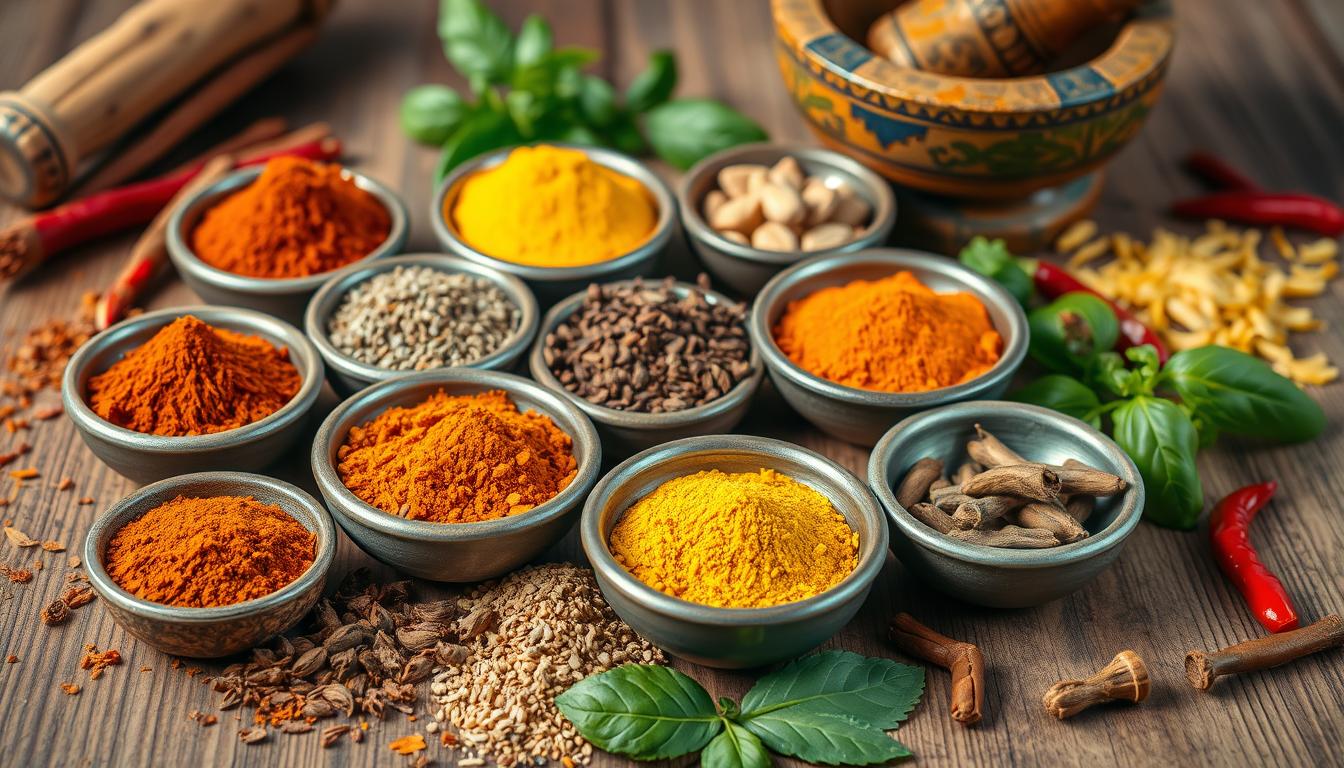
When cooking Indian dishes, the right essential spices are key. For beginners, picking the first spices can be tough. But a good indian spice starter kit can help a lot. Must-have beginner spices include cumin, coriander, turmeric, and red chili powder.
These spices are the base for many Indian dishes. They’re a great start for exploring Indian cuisine.
A good indian spice starter kit should have a variety of essential spices. Include garam masala, cinnamon, and cardamom too. These add depth and warmth to dishes like curries and stir-fries.
Having these beginner spices lets you make delicious, authentic Indian meals.
When picking an indian spice starter kit, look for one that fits your needs. Some kits have pre-mixed blends, others let you mix your own. Choosing the right beginner spices and indian spice starter kit makes cooking Indian dishes easy and fun.
Popular Spice Blends in Indian Cuisine
Indian cuisine is famous for its rich spice blends. These blends change a lot from one place to another. Garam masala and curry powder are two top spice blends in Indian cooking.
Garam masala includes spices like cloves, cardamom, and cinnamon. It adds warmth and smell to food. Curry powder, made of turmeric, coriander, and cumin, gives a rich, spicy taste. Both are key in Indian cooking, showing the variety of Indian dishes.
Learning about these spice blends is vital for mastering Indian cooking. They can make simple dishes taste amazing. Whether you’re making a curry or biryani, garam masala and curry powder are great to have. Their unique tastes and smells will enhance your Indian dishes.

Try out different spice blends like garam masala and curry powder. This will help you understand Indian cuisine better. You’ll make dishes that everyone will love. So, dive into the world of Indian spice blends and see the magic of garam masala and curry powder for yourself.
How to Store Indian Spices Properly
Proper spice storage is key to keeping Indian spices fresh. Storing them right helps them stay potent and aromatic for longer. This is vital for maintaining spice quality. To do this, use airtight containers and keep them from sunlight and moisture.
Keeping spices in a cool, dark spot is important. A pantry or cupboard works well. This prevents them from getting stale or losing flavor. Also, avoid storing them near heat sources like ovens or stovetops, as it can damage them.
By following these tips, you can keep your Indian spices fresh and flavorful. Proper spice storage is a must for cooking with Indian spices. It ensures you get the full taste and smell of these amazing spices. With the right storage, your spices will last longer.
Storing spices properly is an art that requires attention to detail and a bit of patience. By taking the time to store your spices correctly, you can enjoy the full flavor and aroma of Indian cuisine.
The Health Benefits of Indian Spices
Indian spices have been used for centuries for cooking and health. They have medicinal properties and nutritional value. For example, turmeric contains curcumin, which fights inflammation and protects cells.
These spices offer many health benefits. They can be part of our daily routine for better health. Cumin helps with digestion and has antioxidants. Coriander fights inflammation and lowers cholesterol. These spices are also full of vitamins, minerals, and fiber.
Research shows Indian spices can prevent diseases like heart disease and cancer. Their antioxidants protect cells and lower disease risk. Adding these spices to our diet can improve our health.
Indian spices are a treasure trove of health benefits and nutritional value. Using them in cooking adds flavor and nutrition to our meals.
In conclusion, Indian spices are key in Indian cuisine and offer many health benefits and nutritional value. Knowing their medicinal properties helps us use them for better health and well-being.
Tips for Cooking with Indian Spices
Cooking with Indian spices needs you to know how to enhance their flavors. Learning spice cooking techniques like roasting and grinding is key. These methods help release the spices’ aromas and tastes. By mixing spices in the right way, you can make dishes like curries and biryanis taste authentic and delicious.
Using fresh, high-quality spices is a top indian cooking tip. It ensures your dishes taste and smell their best. Knowing which spices to use in different dishes is also important. For example, turmeric is great in curries, and cumin is perfect for biryanis.
The right cooking with spices technique can change everything. Sautéing spices in oil before adding other ingredients can enhance their taste. Using the right amount of spices is also key. Too little makes dishes taste bland, while too much can overwhelm other flavors. By following these indian cooking tips and mastering spice cooking techniques, you can make tasty and authentic Indian dishes that will wow everyone.
Trying out different spice blends and techniques can also spice up your Indian cooking. You can mix various spices to create new flavors or use different cooking methods like grilling or roasting. With practice and patience, you can become a pro at cooking with spices and make dishes that are full of flavor and aroma.
Regional Spice Varieties Across India
India’s diverse regions showcase a wide range of regional spices. Each has its own flavor and use in local dishes. The country’s spice diversity highlights its rich culinary history. Different areas have their own spice mixtures, from spicy south to creamy north.
The south is known for bold spices like turmeric, coriander, and cumin. The north is famous for rich curries with cumin, cinnamon, and cardamom. The east has a unique spice mix, showing cultural exchange with neighbors, with a focus on regional spices like mustard and fenugreek.

Exploring India’s indian regional cuisine shows how spice diversity defines the country’s food. Whether it’s a spicy southern curry or a warm northern stew, regional spices shape India’s flavors. Embracing this spice diversity helps us appreciate the complexity of indian regional cuisine.
The art of blending spices is a delicate one, requiring a deep understanding of the unique properties and flavors of each ingredient. As we explore the many different regional spices of India, we can gain a new appreciation for the craftsmanship and tradition that goes into creating the country’s many iconic dishes.
Using Indian Spices in Everyday Cooking
Indian spices bring a world of flavors to your dishes. They can make any meal, from traditional Indian to global cuisine, taste amazing. By adding using spices in cooking to your daily meals, you can make them more exciting and satisfying.
Start by trying different spice blends and spices. Add cumin to your Mexican dishes or garam masala to your stews. You can also spice up soups, salads, and veggies. The fun is in experimenting and trying new things.
Exploring Indian spices opens up a world of possibilities. They can enhance both global cuisine and traditional Indian dishes. By using Indian spices in your cooking, you can make your meals more flavorful and exciting. With practice, you’ll become great at using spices in cooking and create dishes that everyone will love.
Indian spices have the power to transform any dish, and by incorporating them into your everyday cooking, you can add a new level of flavor and excitement to your meals.
Common Mistakes to Avoid When Cooking with Spices
Cooking with spices is a delicate art. Common spice mistakes can happen to anyone, even experienced cooks. One big mistake is using too much spice, which can ruin the dish’s balance. Always taste and adjust as you go, adding spices little by little.
Another mistake is not roasting spices right. Roasting brings out their depth and complexity. To roast, heat spices in a dry pan over low heat, stirring often, until fragrant and slightly darkened. This simple step can greatly improve your dish’s flavor.

Knowing these common spice mistakes and how to avoid them can improve your spice cooking. Whether you’re new or experienced, using spices well is key to great dishes. With practice and patience, you can create unforgettable meals.
Cooking with spices is an art that requires patience, practice, and attention to detail. By avoiding common mistakes and following simple techniques, you can elevate your cooking and create dishes that are truly remarkable.
Discovering Authentic Indian Recipes
Indian cuisine is a colorful mix of authentic Indian recipes. It’s made with a variety of spices, herbs, and other ingredients. From spicy curries in the south to creamy kormas in the north, traditional dishes are key to Indian cooking. Now, modern Indian cuisine has updated these classic recipes for today’s cooks and food lovers.
Spices are at the heart of Indian cooking. They add depth, warmth, and complexity to any authentic Indian recipe. Whether you’re making a slow-cooked curry or a quick stir-fry, the right spices can make your dish stand out. Exploring traditional dishes and modern Indian cuisine can introduce you to new flavors and cooking techniques.
When you start exploring authentic Indian recipes, you’ll find many dishes to try. From comforting chana masala and saag paneer to fancy restaurant-style dishes, there’s always something new. By diving into the diversity of traditional dishes and modern Indian cuisine, you can enhance your cooking and discover India’s bold flavors.
Conclusion: Embrace the World of Indian Spices
Our journey through Indian spices has just started. Indian food is a mix of flavors, with each spice adding its own special touch. By diving into the Indian spice journey, you open up a world of cooking possibilities. You’ll also learn more about India’s rich culture.
If you love cooking or are new to Indian flavors, keep exploring. Add these spices to your daily meals. Try making real Indian dishes and enjoy the amazing smells and tastes of Indian food.
Exploring Indian spices is a never-ending adventure. It lets you discover new cooking ideas and connect with India’s diverse traditions. So, start this flavorful journey. Let the smells and tastes of India make your cooking exciting and fill your heart with joy.