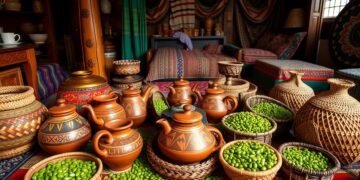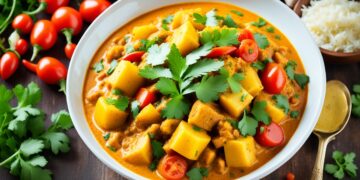
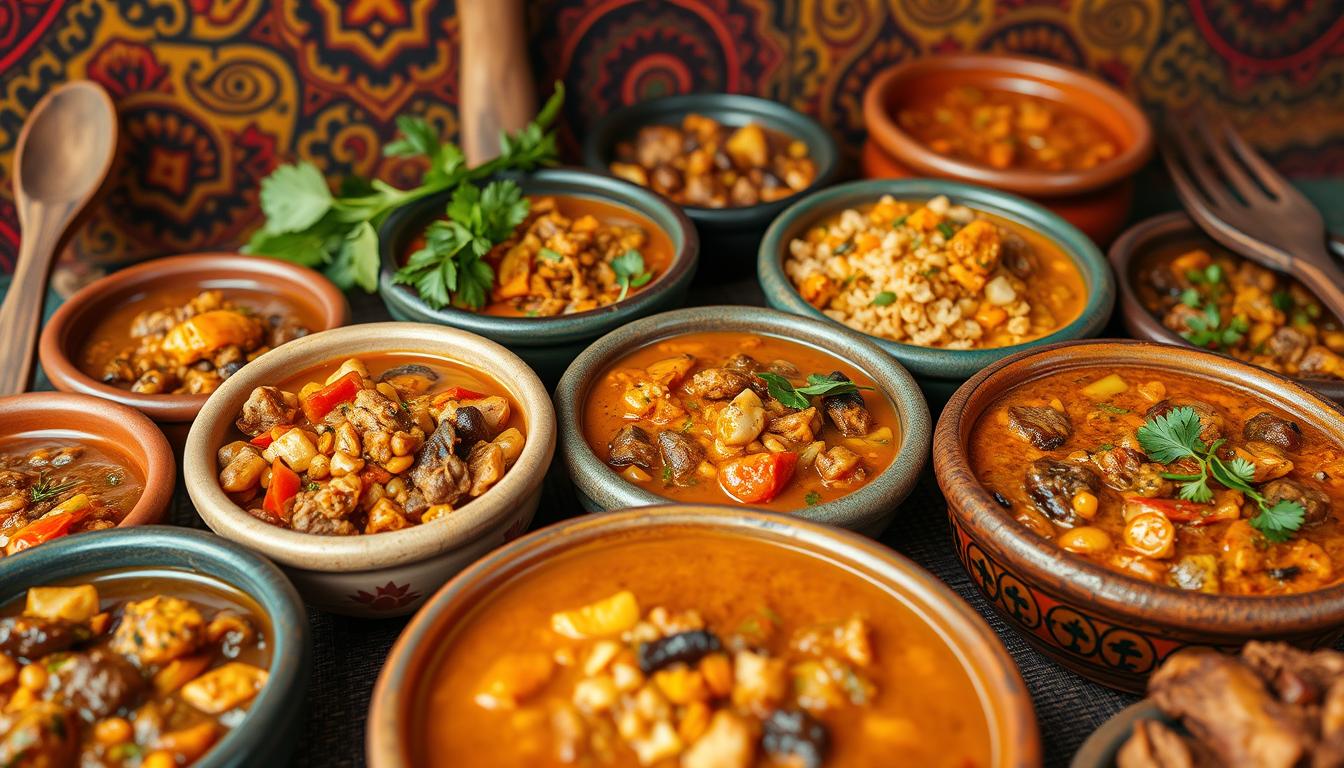
African cuisine is a vibrant and diverse world. It showcases the continent’s rich cultural heritage. At its heart are African stews, which blend many flavors and ingredients.
In this article, we’ll explore African stews’ rich history and cultural significance. We’ll look at the spicy stews of West Africa and the hearty stews of South Africa. We’ll also dive into regional variations, popular ingredients, and cooking techniques.
By exploring African stews, we gain a deeper appreciation for African cuisine. We discover new ways to enjoy the bold flavors and traditional dishes that make it unique.
Introduction to African Stews
African food culture is rich and diverse, with stew recipes at its heart. Stews symbolize community, hospitality, and tradition in many African societies. The history of African stews goes back to ancient times, with each region having its own stew recipes.
Stew recipes are passed down through generations, with each family adding their own twist. Stews are key in African culture, served at special occasions to bring people together. They foster a sense of community and belonging.
We will explore the different stew recipes and ingredients from various regions. From West Africa’s spicy stews to Southern Africa’s hearty ones, each region has its own unique African food culture and stew recipes.
African stews are a true reflection of the continent’s rich cultural heritage, with each recipe telling a story of tradition, community, and hospitality.
Exploring African stews helps us understand the continent’s diverse African food culture. Whether you love food or just want to try new flavors, African stews will delight and inspire. They offer a unique glimpse into the rich cultural heritage of the continent.
A Journey Through Regional Varieties
Regional African stews show the continent’s rich cultural heritage. From Ghana’s spicy flavors to Senegal’s rich stews, each area has its own African stew variations. Local ingredients, cooking methods, and traditions make these dishes unique.
West Africa boasts a wide range of stews, each country adding its own twist. The regional African stews here are known for their bold tastes and hearty ingredients. This makes them a key part of West African food. Countries like The Gambia and Sierra Leone have their own special stews, showing the region’s deep culinary history.

Exploring West Africa’s regional African stews reveals their complexity and diversity. These stews are loved for their rich flavors, hearty ingredients, and cultural importance. They have become a favorite dish worldwide. Whether you love food or just want to try something new, West Africa’s regional African stews will amaze and inspire you.
The beauty of African stews lies in their ability to bring people together, regardless of their cultural background or geographical location. They are a true reflection of the continent’s warm hospitality and rich culinary heritage.
In our journey through West Africa’s regional African stews, we’ll look at unique ingredients, cooking methods, and cultural traditions. We’ll see the different African stew variations across the region. Each one has its own special qualities and is deeply loved. Join us as we explore the rich flavors and cultural importance of regional African stews.
Popular Ingredients in African Stews
African cuisine is known for its diverse and flavorful stew ingredients. These often include meats, vegetables, and spices. Meat options like beef, chicken, and lamb are common. They are paired with vegetables like onions, garlic, and bell peppers for extra flavor.
In African cuisine, aromatic spices like ginger, cumin, and coriander are used. They add warmth and complexity to the stews. The slow-cooking process creates a rich and flavorful broth, a hallmark of African stews.
Popular stew ingredients also include leafy greens like spinach and kale. They are added towards the end to keep their nutrients and texture. Root vegetables like carrots and potatoes are also used. They add thickness and heartiness to the stews. This variety of ingredients makes African stews delicious and flavorful for everyone.
African stews show the continent’s rich cultural heritage. Each region has its own twist on this beloved dish. Exploring the ingredients and cooking techniques of African cuisine deepens our appreciation for its diversity and complexity.
Cooking Techniques for Perfect Stews
Cooking techniques are key in making traditional African dishes, like stews, perfect. Slow cooking has been used for ages. It lets flavors mix well and meat get tender. This method often uses clay pots and wood fires for extra flavor.
In today’s kitchens, it’s hard to match these old ways. But, using slow cookers or Dutch ovens can get close. Braising also works well for making tough meat tender and tasty.

Techniques like stewing and braising are vital for tasty, authentic African dishes. Learning these methods helps home cooks make delicious stews. They’re great for any meal, whether it’s a big event or a simple dinner.
Cooking is not just about following a recipe, it’s about understanding the techniques and methods that bring out the best flavors and textures in your ingredients.
Trying out different cooking methods and ingredients lets home cooks make their own versions of traditional dishes. With practice and patience, anyone can become a great cook. They’ll make meals that everyone will love.
Health Benefits of African Stews
African food culture is famous for its tasty and diverse dishes, including stews. These meals are not just delicious but also good for you. They are packed with vitamins, minerals, and antioxidants.
African stews are great for boosting your immune system. They often have ginger, garlic, and chili peppers. These ingredients help keep your body healthy. The slow cooking makes the nutrients easier for your body to use.
Eating African stews can also help with digestion and give you energy. They have protein, complex carbs, and healthy fats. This mix helps control blood sugar and keeps you full longer. African stews are a tasty way to enjoy good health and explore African food culture.
African stews show the region’s rich culinary diversity. They bring people together through food. By trying these dishes, we enjoy tasty meals and a healthier life.
How to Pair African Stews
African cuisine is full of flavors, and the right wine or drink can make meals better. African cuisine pairs well with many wines. For example, a rich stew from West Africa goes great with a full-bodied red wine. A lighter stew from East Africa pairs well with a crisp white wine.
Beer and other drinks can also match the flavors of African stews. A cold beer can cut the richness of a hearty stew. A refreshing juice can add a nice contrast to the savory flavors. Popular drinks include ginger beer, mango juice, and sparkling wine.

Tea and coffee can also pair well with African stews. A strong coffee can complement the rich flavors of a stew. A soothing tea can help balance out the spices. Finding the right balance between the stew’s flavors and the drink’s is key. By trying different pairings, you can find the perfect match for your African cuisine.
Paying attention to the flavors and ingredients in your African stew can help you to make informed decisions about wine pairings. Consider the type of protein, the spices and seasonings, and the overall flavor profile of the dish when selecting a beverage to pair with it.
Exploring wine pairings and other drinks can add a new layer to your African cuisine experience. Whether you like red wine, white wine, or something else, there are many options. So why not try different pairings and find the perfect match for your favorite African stew?
Tips for Making Authentic African Stews
To make authentic African dishes, focus on traditional cooking techniques and ingredients. Use berbere spice, a spice mix from Ethiopia, and injera bread. This sourdough flatbread is great with stews.
Respecting cultural traditions is key when making authentic African dishes. Use top-quality ingredients and stick to traditional cooking techniques. This way, you’ll make truly authentic and tasty African stews.
Traditional ingredients are also vital for African stews. For example, real palm oil is better than substitutes. It adds a lot to the flavor and authenticity of the dish. By mixing these ingredients with traditional cooking techniques, you’ll make delicious and authentic African dishes.
African stews celebrate community and culture. By honoring these traditions, we make dishes that are tasty, meaningful, and authentic.
Follow these tips and respect the traditions of African stews. You’ll make authentic African dishes that are full of flavor and character. Whether you’re an experienced cook or new to African cuisine, these tips will help you make dishes that are both delicious and authentic African dishes.
Vegetarian and Vegan African Stews
African cuisine has many tasty vegetarian African stews and vegan African stews. These are great for those who want plant-based meals. They use vegetables, legumes, and grains, seasoned with spices and herbs.
Ingredients in vegetarian African stews include sweet potatoes, carrots, and green beans. They’re often mixed with lentils and chickpeas for protein. Vegan African stews might have mushrooms like portobello and cremini for a meaty taste.
Vegetarian and vegan African stews are very nutritious. They’re full of vitamins, minerals, and antioxidants. They’re also low in calories and fat, making them good for those watching their diet.

There are many ways to cook vegetarian and vegan African stews. You can simmer, braise, or stew them. These methods enhance the flavors and create a rich broth. Cooking these stews is easy and fun, a great way to explore African cuisine.
African stews show the continent’s rich cultural heritage. Vegetarian and vegan African stews prove African cooks’ creativity and resourcefulness. They offer delicious, nutritious plant-based options for trying something new.
Celebrating Special Occasions with Stews
African food culture is all about tradition and community. Stews are a big part of weddings, holidays, and harvest festivals. They bring people together, creating a sense of unity and belonging.
Special occasions in Africa are celebrated with traditional stews. These stews are a link to Africa’s rich culinary heritage. Food is an essential part of African culture, and stews are at the heart of celebrations, bringing comfort and warmth.
West Africa’s spicy stews and Southern Africa’s hearty stews are unique.
Stews in African food culture are more than just food. They connect people, share stories, and create memories. Whether it’s a wedding, holiday, or harvest festival, stews are central, bringing everyone together.
African stews are a true reflection of the continent’s rich cultural diversity and its people’s love for good food, warm hospitality, and lively celebrations.
Recipes from Across Africa
African stew recipes show the continent’s rich cultural heritage. Each region, from West Africa’s spicy stews to South Africa’s hearty ones, has its own taste. The mix of different influences makes African cuisine unique.
The Ghanaian Groundnut Stew is a favorite, made with groundnuts, beef or chicken, and spices. It’s often eaten with fufu or rice. The South African Bobotie Stew is also popular, with ground beef or lamb, spices, dried fruits, and nuts, topped with eggs.
Using traditional ingredients and cooking methods is key to authentic African stews. For example, berbere spice in Ethiopian stews and ras el hanout in North African stews enhance flavors. Exploring different recipes lets you enjoy the rich variety of African stews.
Exploring African stews reveals the local culture and traditions. Embracing these differences and trying new ingredients and techniques can lead to a unique and tasty African stew experience.
Exploring African Stews Globally
African stews are loved worldwide for their rich flavors and aromas. They blend traditional and modern cooking, creating a unique taste. This makes them a favorite among food lovers everywhere.
West Africa’s spicy stews and South Africa’s hearty braais show each region’s unique taste. Local ingredients like berbere spice in Ethiopian stews add a special flavor. This mix of old and new makes African stews stand out.
African stews are becoming more popular, with chefs and home cooks adding their twist. This fusion of international influences with African cuisine is exciting. It’s making the food scene vibrant and dynamic.
The beauty of African stews lies in their ability to bring people together, transcending cultural and geographical boundaries. Whether you’re in a bustling city or a rural village, the aroma of a simmering stew is sure to evoke a sense of community and warmth.
African stews are now celebrated globally, enjoyed by many. They show the power of food to unite and inspire. They remind us of the importance of our cultural heritage through global African cuisine and international influences.
Conclusion: Experience African Stews at Home
African stews are a world of vibrant flavors. They range from rich West African stews to fragrant East African curries. This cuisine is a true delight for the senses.
Whether you’re a seasoned cook or new to African dishes, try making African stews. Use different ingredients and spices to make your own versions. Serve them with traditional sides like injera bread or jollof rice for a complete meal.
Exploring African stews at home opens up new flavors and deepens your appreciation for African cooking. So, put on your apron, get your ingredients ready, and let the aroma of African stews fill your kitchen. Start a flavorful journey and enjoy African cuisine in your own home.