Asian cooking techniques are gaining popularity in the United States. Spicy Asian cuisine is a favorite among many. The cultural importance of spicy food in Asian cultures is clear. Its global fame comes from the variety of flavors it brings.
Korean spicy dishes, Indian and Thai curries, and more offer a range of tastes. Modern cooking has adopted these techniques. Restaurants and home cooks now use them in their recipes.
Spicy Asian cuisine is a staple in many American homes. People love trying new recipes and ingredients. Whether you like mild or very spicy food, there’s something for everyone.
What is Spicy Asian Cuisine?
Spicy Asian cuisine is a rich and varied tradition found across many countries. It uses spicy ingredients like chili peppers, wasabi, and ginger to add flavor and heat to asian dishes. The heat in these dishes can range from mild to very hot.
Asian dishes get their heat from different chili peppers. Some peppers, like the ghost pepper, are very hot. Others, like the jalapeno, are milder. This variety is seen in Indian and Southeast Asian cuisine.
Exploring the heat levels and spicy ingredients in Asian cuisine reveals its complexity. Whether you like dishes that are mildly spicy or very hot, there’s something for everyone. Spicy Asian cuisine offers a wide range of flavors.
The use of spicy ingredients in Asian cuisine is not just about adding heat, but also about adding depth and complexity to dishes. By understanding the different types of spicy ingredients and how they are used, you can gain a greater appreciation for the art of Asian cooking.
Key Ingredients in Spicy Asian Dishes
Creating authentic spicy Asian dishes requires the right ingredients. Asian cooking techniques often mix spicy ingredients like chili peppers and wasabi. These add heat and flavor. The cultural significance of these ingredients is huge, as they vary across different Asian cuisines.
In many Asian cultures, spicy ingredients do more than just add heat. They balance flavors and textures. For example, Thai cuisine uses fish sauce and lime juice for a sweet, sour, and spicy mix. Korean cuisine relies on gochujang (Korean chili paste) for its sweet and spicy taste.

The cultural significance of spicy Asian dishes is huge. Many ingredients have been passed down through generations. They carry tradition and cultural heritage. By understanding and respecting these traditions, cooks can make dishes that are delicious and authentic.
The use of spicy ingredients in Asian cuisine is not just about adding heat, but about creating a balance of flavors and textures that is both harmonious and delicious.
By using asian cooking techniques and spicy ingredients, you can make dishes that are flavorful and aromatic. These dishes are culturally significant and meaningful. Cooking with these ingredients can add depth and complexity to your dishes, impressing everyone.
Popular Spicy Asian Dishes to Try
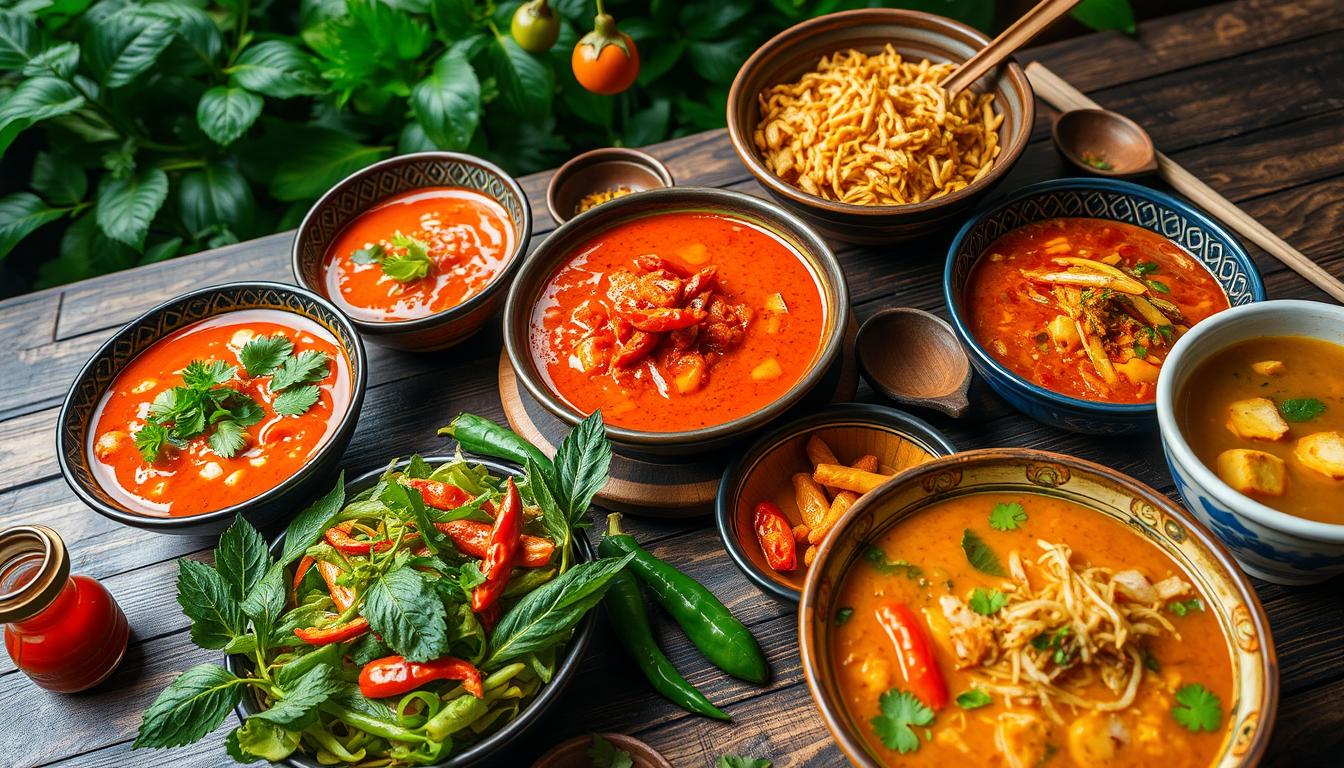
Asian dishes are loved for their wide range of flavors and heat levels. They are a hit among those who enjoy spicy food. From Korea’s spicy kimchi stew to China’s Szechuan hot pot, there’s much to try. For a new adventure, Thai cuisine is a great choice, known for its bold and aromatic tastes.
The Korean kimchi stew is a favorite, made with fermented kimchi and spices. It’s not just tasty but also full of nutrients. The Chinese Szechuan hot pot is another hit, letting diners pick their own spicy sauces and ingredients for a unique meal.
In India, Vindaloo is a spicy dish with marinated meat and spices. It’s often served with rice or naan to cool down the heat. Japan also has its own spicy dishes, like wasabi and shichimi togarashi, adding a bold kick to meals. Whether you love spice or just want to try something new, there’s an Asian dish for you.
Spicy food brings people together, and Asian cuisine is no exception. It offers rich flavors and varied heat levels, making it exciting for mealtime.
Why not start a culinary journey through Asia and explore its spicy dishes? With its unique flavors and heat levels, Asian cuisine will surely please even the most picky eaters. From spicy to mild, there’s something for everyone to enjoy.
The Role of Heat in Asian Cooking
Heat is key in Asian cooking, making flavors and aromas pop. It ranges from mildly spicy to very hot. Spicy ingredients like chili peppers and wasabi add that kick.
Techniques like stir-frying and grilling bring out natural flavors and add heat. Chefs use these methods to control the heat in their dishes. For instance, stir-frying cooks ingredients quickly over high heat, keeping them crunchy and flavorful.

Asian chefs balance heat with other flavors to make dishes spicy yet refined. Using heat levels and spicy ingredients is an art. It requires understanding how flavors and textures work together. This way, Asian cuisine offers a wide variety of dishes for all tastes.
Asian cooking is not just about adding spice, it’s about creating a harmony of flavors that delights the senses. By balancing heat with other ingredients, chefs create dishes that are both nourishing and delicious.
In conclusion, heat is vital in Asian cooking, playing many roles. By mastering how to balance heat levels with other flavors, chefs make amazing dishes. Whether you’re a seasoned foodie or new to Asian cuisine, exploring heat balance will surely excite your senses.
Cooking Techniques for Spicy Dishes
To master spicy Asian dishes, you need to know asian cooking techniques. These methods help keep flavors and heat in check. Stir-frying, braising, steaming, and grilling are key. Stir-frying is great for spicy dishes because it cooks ingredients quickly and evenly.
Adjusting the heat in spicy dishes is important. You can do this by adding spicy ingredients late in cooking. Or, mix different cooking methods to balance the heat. Knowing about asian cooking techniques lets you make dishes from mildly spicy to very hot.
Learning cooking methods and spicy ingredients is key for home cooks. You can make many tasty spicy Asian dishes. The secret is balancing flavors and heat with the right asian cooking techniques.
With practice and patience, anyone can become a master of cooking spicy Asian dishes. The reward is a world of bold flavors and aromas that will leave you wanting more.
Health Benefits of Spicy Ingredients
Spicy ingredients are key in many cuisines, like Asian cooking. They offer medicinal value and many health benefits. Eating spicy food can help with digestion, boost metabolism, and strengthen immunity. Their anti-inflammatory properties can also lower the risk of chronic diseases.
A study in the Journal of Nutrition found capsaicin in chili peppers fights inflammation well. This makes it a great spicy ingredient for those fighting inflammation. For centuries, spices and chili peppers have been used in traditional remedies for many health issues.

Adding spicy ingredients to our meals can greatly benefit our health. They can reduce pain and improve heart health. With their medicinal value and health benefits, spicy ingredients are vital in many global cuisines. Embracing spicy food can bring new flavors and health perks, making us feel full of energy and life.
Capsaicin has been shown to have potent anti-inflammatory effects, making it a valuable ingredient for those seeking to reduce inflammation and improve their overall health.
The Art of Pairing Side Dishes
Enjoying asian dishes is better with the right side dishes. Meal pairing is an art that balances flavors, textures, and temperatures. For spicy Asian meals, side dishes can cool down your palate or make the dish spicier.
Steamed rice or noodles can offer a comforting contrast to spicy Asian dishes. A refreshing salad with pickled vegetables can also cut the meal’s richness. The goal of meal pairing is to balance and complement the main dish’s flavors with the side dishes.
Popular side dishes for spicy Asian meals include stir-fried vegetables, braised greens, and fermented kimchi. These dishes add variety and a range of textures and flavors. By mastering meal pairing with asian dishes and side dishes, you can enhance your dining experience.
Pairing side dishes with spicy Asian meals is an art that requires consideration of flavors, textures, and temperatures to create a harmonious dining experience.
With practice and experimentation, you can become a master of meal pairing. Enjoy the rich flavors and variety of spicy Asian cuisine. The right side dishes can make your dining experience better and leave you craving more.
Exploring Vegan and Vegetarian Options
Asian cuisine is a treasure trove for those on a vegan or vegetarian diet. It’s filled with spicy ingredients that make plant-based meals burst with flavor. You can find everything from vegan curries and stir-fries to vegetarian noodle dishes and salads. Many restaurants now highlight vegan options and vegetarian options on their menus.
Vegan curries, made with spicy ingredients like chili peppers and garlic, are a hit. Vegetarian dishes, like stir-fries with tofu and mixed vegetables, are also popular. These dishes are not just tasty but also offer health benefits thanks to the spicy ingredients used.
Many Asian restaurants now have special menus for vegan and vegetarian diners. This makes it simpler for those on a plant-based diet to find dishes they’ll love. With the growing demand for vegan options and vegetarian options, enjoying Asian cuisine has never been easier.
By adding spicy ingredients to vegan and vegetarian dishes, chefs create meals that are both tasty and healthy. This has led to the creation of many exciting and nutritious vegan options and vegetarian options in Asian cuisine.
The Evolution of Spicy Asian Cuisine in the U.S.
The introduction of spicy Asian cuisine in the United States has seen a big cuisine evolution over time. Asian immigrants brought their spicy dishes, which blended with American tastes. This mix of Asian spices and American ingredients created a unique flavor in many American homes.
Early Asian immigrants brought their food traditions to the U.S. Their dishes became popular, starting a spicy food trend. Now, you can find spicy Asian dishes everywhere, from Chinese Szechuan to Korean kimchi. These dishes have changed american cuisine a lot.
The love for spicy food has led to new dishes that mix Asian spices with American ingredients. This change has opened up new tastes for Americans. It has also grown the spicy food industry. As spicy Asian food gets more popular, it will keep shaping american cuisine.
The growth of spicy Asian cuisine in the U.S. shows the power of cultural exchange. As we try more Asian flavors, we’ll see even more exciting spicy food options.
DIY: Building Your Own Spicy Asian Dish
Creating your own spicy Asian dish is easy with diy recipes at your disposal. Mix spicy ingredients like chili peppers, garlic, and ginger with asian cooking techniques. This way, you can make a flavor that’s just right for you. It doesn’t matter if you’re a pro or just starting out. The most important thing is to have fun and try new things.
First, pick a protein like chicken, beef, or tofu. Then, decide how spicy you want it to be. You can go from mild to very spicy. Add some onions, bell peppers, and snow peas for extra flavor. Finish it off with a sauce made from soy sauce, hoisin sauce, and rice vinegar. By following these steps and using diy recipes as guides, you can make a tasty and authentic spicy Asian dish.

When you dive into spicy Asian cuisine, don’t be shy to try new asian cooking techniques and ingredients. Stir-frying, braising, steaming, and roasting all have their own special ways of bringing out flavors and textures. With a bit of practice, you’ll soon be making delicious spicy Asian dishes like a pro. So, why not start today and see how much fun you can have making your own spicy Asian dish from scratch?
By experimenting with different diy recipes and spicy ingredients, you can create a truly personalized spicy Asian dish that reflects your unique taste and style.
Spicy Asian Snacks to Savor
When it comes to asian snacks, there’s a world of choices. You can find everything from spicy roasted nuts to savory dumplings. Trying new street food flavors is a big part of the fun.
In many Asian countries, spicy food is a big part of the diet. Now, with international grocery stores and online shopping, you can easily find a variety of asian snacks. Whether you like crunchy or soft snacks, there’s something for everyone.
Looking to try new street food snacks? You can find spicy roasted chickpeas, wasabi peas, and kimchi-flavored nuts. These snacks are tasty and full of nutrients. If you’re feeling bold, try making your own spicy food snacks at home.
No matter what you like, there’s an asian snack for you. They add excitement to your day with their bold flavors and spicy kick. So, why not give them a try and explore a new world of flavors?
Conclusion: Embracing the Heat
As we wrap up our look at spicy Asian cuisine, it’s clear that these flavors and heat levels are deeply rooted in culture. We’ve seen how essential ingredients and techniques bring out the best in these dishes. This shows the rich heritage of this beloved food style.
Our journey through spicy Asian cuisine has been exciting. We’ve made new discoveries and learned to appreciate its diversity. By embracing the heat and flavors, we open up new culinary adventures and delight our senses.
Keep exploring the world of spicy Asian cuisine and enjoy every step. Try new ingredients and recipes, and let your taste buds lead the way. These dishes showcase the creativity and cultural richness of Asia, and they should be celebrated everywhere.