Caribbean cuisine is a mix of African, European, and indigenous cultures. This blend creates a unique taste of tropical flavors and island dishes. The bold spices and lively dishes make it a fascinating topic to explore.
Each island has its own flavor profile, from jerk seasonings to pepper pot soups. This shows the diversity of Caribbean cuisine. In this article, we will explore the history, iconic ingredients, and popular dishes of Caribbean food. We will also look at its influence on American food culture and how to prepare these delicious dishes.
The Rich History Behind Caribbean Cuisine
Caribbean food history is complex and fascinating. It’s shaped by African, European, and indigenous cultures. The transatlantic slave trade and European colonization introduced new ingredients and cooking methods. African cuisine brought okra, yams, and plantains, which are now staples.
The indigenous peoples, like the Taino and Kalinago, added their knowledge of native ingredients. European colonization, by the British, French, Spanish, and Dutch, also had a big impact. They introduced wheat, cattle, and pigs. Knowing the cultural influences helps us understand the depth of Caribbean cuisine.

The Caribbean food history shows the region’s diverse cultural heritage. The mix of African cuisine, European traditions, and indigenous practices created a unique flavor. Exploring these cultural influences helps us appreciate the region’s culinary history and the people who shaped it.
The history of Caribbean cuisine is a testament to the region’s resilience and creativity, with each culture leaving its mark on the culinary landscape.
In conclusion, the Caribbean food history is rich and complex. It’s shaped by African, European, and indigenous cultures. By understanding this history, we can appreciate the region’s unique culinary tradition and the people who helped create it.
Iconic Ingredients in Caribbean Cooking
Caribbean ingredients are key to its lively cuisine. Spices, seasonings, and produce add flavor to dishes. Allspice, thyme, and scotch bonnet peppers add heat and aroma. Fruits like mangoes and coconuts bring sweetness, while sweet potatoes add texture.
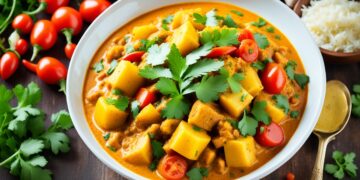
Coconut milk is a must in many Caribbean recipes. It makes soups, stews, and curries creamy and rich. These ingredients mix to create the unique flavors of Caribbean dishes. Dishes like jerk chicken and curried goat get their bold tastes from these spices.

Coconut milk is a big part of Caribbean cooking. It adds a creamy texture to dishes. Using these ingredients, you can bring Caribbean flavors into your cooking. Whether it’s a stew or curry, these ingredients make your dishes richer and more flavorful.
The beauty of Caribbean cuisine lies in its ability to blend different flavors and ingredients to create something unique and delicious. With the use of Caribbean ingredients and spices, the possibilities are endless, and the flavors are always exciting.
Popular Dishes from the Caribbean
The Caribbean is famous for its varied and tasty food. It offers a wide range of Caribbean dishes for all tastes. From spicy jerk seasoning to rich curry, its dishes show its cultural roots.
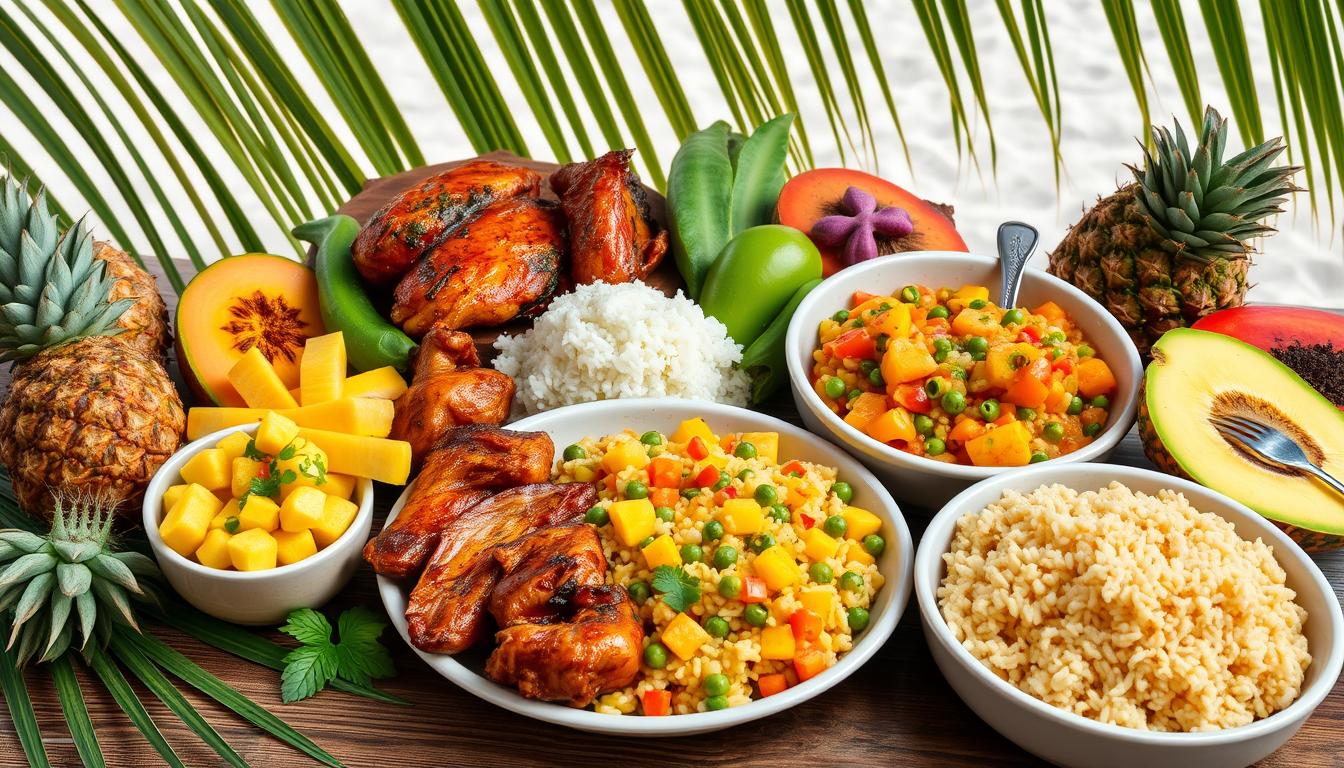
Jerk chicken, curry duck, and pepper pot soup are favorites. They are loved by both locals and tourists. Jamaican jerk seasoning gives meats a smoky taste. Trinidadian curry sauce adds a unique aroma to dishes.

The Caribbean also has many seafood dishes. Conch fritters from the Bahamas and flying fish from Barbados are popular. These dishes celebrate the region’s seafood and its role in Caribbean food.
The Caribbean’s culinary diversity is a true reflection of its cultural richness, with each dish telling a story of the region’s history and heritage.
The Art of Preparing Caribbean Meals
Caribbean cooking is a vibrant mix of old and new. It uses traditional methods like steaming and roasting. These techniques have been passed down for generations.
Today, many chefs in the Caribbean stick to these methods. They steam fish in banana leaves or roast meats over open fires. This makes their dishes authentic and full of flavor.
But Caribbean cooking isn’t just about tradition. It’s also about trying new things. Chefs are adding international flavors and techniques to classic dishes. This mix of old and new has made Caribbean cuisine exciting and ever-changing.
Exploring Caribbean cooking shows how tradition meets innovation. The cuisine is known for its bold flavors and creative use of spices. It truly reflects the region’s diverse culture.
Whether you love food or just want to try something new, Caribbean cooking is a treat. It offers a journey that’s both true to its roots and full of surprises.

As the famous Caribbean chef, Levi Roots, once said, “The key to great Caribbean cooking is to use fresh, locally-sourced ingredients and to never be afraid to experiment and try new things.”
Caribbean cooking is a blend of tradition and innovation. It’s a cuisine that keeps growing and exciting. Whether you cook at home or eat out, it promises a flavorful and inspiring experience.
Celebrating Festivals with Caribbean Food
Caribbean festivals are a time for celebration, and food is at the heart of it. During carnival, the streets are filled with the smell of jerk chicken and pork. You’ll also find fried dumplings and fresh coconut water.
These Caribbean festivals are a time for families and friends to come together. They enjoy delicious food, music, and dance.
At Caribbean festivals, you’ll find a wide variety of food. From spicy curries to sweet pastries, there’s something for everyone. Holiday feasts, like Christmas and Easter, feature special dishes like baked ham and roast turkey.
These dishes are made with love, using traditional recipes passed down through generations.
Food is a way to bring people together and create lasting memories. In the Caribbean, food is an integral part of our culture and identity.
In the Caribbean, carnival is a time for celebration and self-expression. The music, dance, and food all come together to create an unforgettable experience. Whether you’re attending a Caribbean festival or enjoying a holiday feast with family and friends, the food is always a highlight.
So come and experience the vibrant flavors and traditions of the Caribbean for yourself.
Exploring Vegetarian and Vegan Caribbean Options
Caribbean food is often linked with seafood and meat. But, there are many tasty vegetarian Caribbean choices to try. Dishes like callaloo, a leafy green soup, and fried plantains are already vegetarian.
Modern chefs are also getting creative. They make vegan options like jerk “chicken” from tofu or tempeh. And they use plant-based milks in vegan curry dishes.
These plant-based meals meet dietary needs and show off Caribbean cuisine’s flexibility. Caribbean restaurants now offer a variety of plant-based dishes. They are both tasty and new.
In the Caribbean, you can find many vegetarian Caribbean dishes. They use fresh ingredients and bold spices. From vegan takes on classics to fresh plant-based ideas, there’s something for everyone.
Caribbean cuisine is a mix of cultures and flavors. Vegetarian and vegan options add to this exciting mix.
Caribbean food is known for its rich tastes and bold spices. It’s perfect for those seeking vegetarian and vegan meals. From plant-based twists on old favorites to new creations, there’s something for all.
Caribbean Desserts: A Sweet Finale
Dive into the world of Caribbean desserts where coconut and sweet potato mix for a unique taste. The Caribbean offers both classic and new desserts to please any sweet tooth. Coconut cream is a key ingredient, making it a staple in Caribbean cooking.
The coconut cream pie is a favorite, with fresh coconut and sweetened condensed milk. Sweet potato pudding, with its spice and vanilla, is also a hit in many homes. These desserts not only please our taste buds but also show off the Caribbean’s rich food culture.
In the realm of Caribbean desserts, we see a mix of traditional and new flavors and textures. Coconut cream and sweet potato add a special twist to traditional sweets. Whether you’re in the mood for something classic or something new, the Caribbean has a dessert for you.
A Caribbean meal is not complete without a sweet finale, and with the variety of Caribbean desserts available, you’re sure to find the perfect treat to end your meal.
The Influence of Caribbean Cuisine on American Food Culture
The Caribbean has greatly shaped American food culture. Large Caribbean communities in cities like New York, Miami, and Boston have made a big impact. This has led to a mix of flavors and dishes that are now common in American restaurants.
New ingredients and spices from the Caribbean have changed American food. Jerking seasoning and curry are now favorites. Coconut milk and other tropical ingredients add a rich texture to many dishes.
Examples include jerk chicken, curry goat, and coconut shrimp. These dishes show how Caribbean and American cuisines blend together.
As American food culture evolves, the Caribbean influence will likely grow. Fusion cuisine and new flavors are becoming more popular. This means we’ll see even more Caribbean-inspired dishes on menus across the country.
The exchange of culinary ideas between the Caribbean and America has been a dynamic and ongoing process, with each culture influencing the other in meaningful ways. As a result, we’ve seen the creation of a unique and delicious fusion cuisine that reflects the best of both worlds.
How to Experience Caribbean Cuisine at Home
Bringing the vibrant flavors of Caribbean cuisine into your home is simple. Just get the right ingredients and follow easy recipes. You can turn your kitchen into a Caribbean paradise with ingredients like allspice, thyme, scotch bonnet peppers, and coconut milk.
Whether you’re an expert in the kitchen or just starting out, diving into Caribbean cuisine is fun. Try making jerk chicken, curry shrimp, or coconut rice. These dishes bring the bold flavors of the Caribbean right to your table.
So, start by gathering your ingredients and heating up your stove. Let the Caribbean’s delicious smells fill your home. With a bit of exploration, you can enjoy the Caribbean’s flavors in every bite.