Learn how to make authentic Vietnamese pho at home. This popular noodle soup is a key part of Vietnamese cuisine. It has won the hearts of food lovers worldwide, becoming a hit global cuisine. We’ll guide you through making this iconic Asian cuisine dish step by step.
We’ll show you how to make the broth and pick the right noodles and protein. With our help, you’ll be able to make a delicious bowl of pho that will wow your guests. Get ready for a cooking adventure and improve your pho making skills.
Uncovering the Origins of Pho
The story of pho, a famous Vietnamese noodle soup, takes us on a journey through time and cultures. It started in the early 1900s in northern Vietnam. This dish mixed the flavors of China and the French colonial era.
The Historical Journey of Vietnam’s Iconic Noodle Soup
Pho’s story begins in the late 1800s. Vietnamese cooks mixed different ingredients and methods. They took ideas from Chinese noodle dishes and French beef soups to create pho.
This dish quickly became popular in Vietnam. Each region added its own twist to it. Over time, pho has changed, but it still keeps its unique taste.
Pho now has new ingredients and trends, but it stays true to its roots. The spices, meat, and noodles show the long history and origins of pho.
Now, pho is loved not just in Vietnam but worldwide. It continues to win the hearts of food lovers everywhere.
Mastering the Aromatic Broth
The secret to a true Vietnamese pho is in its aromatic broth. This broth is the heart of the dish, giving the noodles and meat a deep flavor. Learning to make the perfect pho broth is a journey every cook should take.
At the core of the broth are spices and herbs that give it its unique taste. Star anise, cinnamon sticks, and cloves mix with coriander seeds and fennel. Fresh ginger and onions add a sweet and rich touch.

For the best pho broth, simmer slowly and patiently. Let the spices and herbs infuse the broth for a long time. This makes the flavors blend well, creating a smooth, aromatic broth. It’s all about finding the right balance of spices, bones, onions, and ginger.
Whether you love pho or are new to Vietnamese food, learning to make the aromatic broth is exciting. With the right ingredients and patience, you can make this iconic dish at home.
Selecting the Perfect Noodles
The foundation of a flavorful pho is the rice noodle. It’s the star that soaks up the broth and complements the protein. When it comes to pho noodles, there are many choices. Each one offers a unique texture and experience. Exploring the world of Vietnamese rice noodles is key to making the perfect pho.
Rice Noodles: The Foundation of a Flavorful Pho
From the slender vermicelli to the thick banh pho, the pho noodle types vary widely. The right pho noodle choice can change the dish completely. It provides the perfect base for the broth and toppings. Knowing the differences between pho noodle selections is important for a true pho experience.
Whether you like your pho noodles chewy, slippery, or something in between, there’s a perfect match out there. The key is to try different ones and find the pho noodle that suits your taste and pho flavors best.
Preparing the Protein Powerhouses
Pho is all about the protein you pick. Whether you like the classic pho beef, the tasty pho chicken, or the vegetarian pho, there’s a lot to choose from. Let’s look at the pho protein options and how to add your favorite pho meat to this yummy Vietnamese noodle soup.
Beef, Chicken, or Vegetarian: Customizing Your Pho
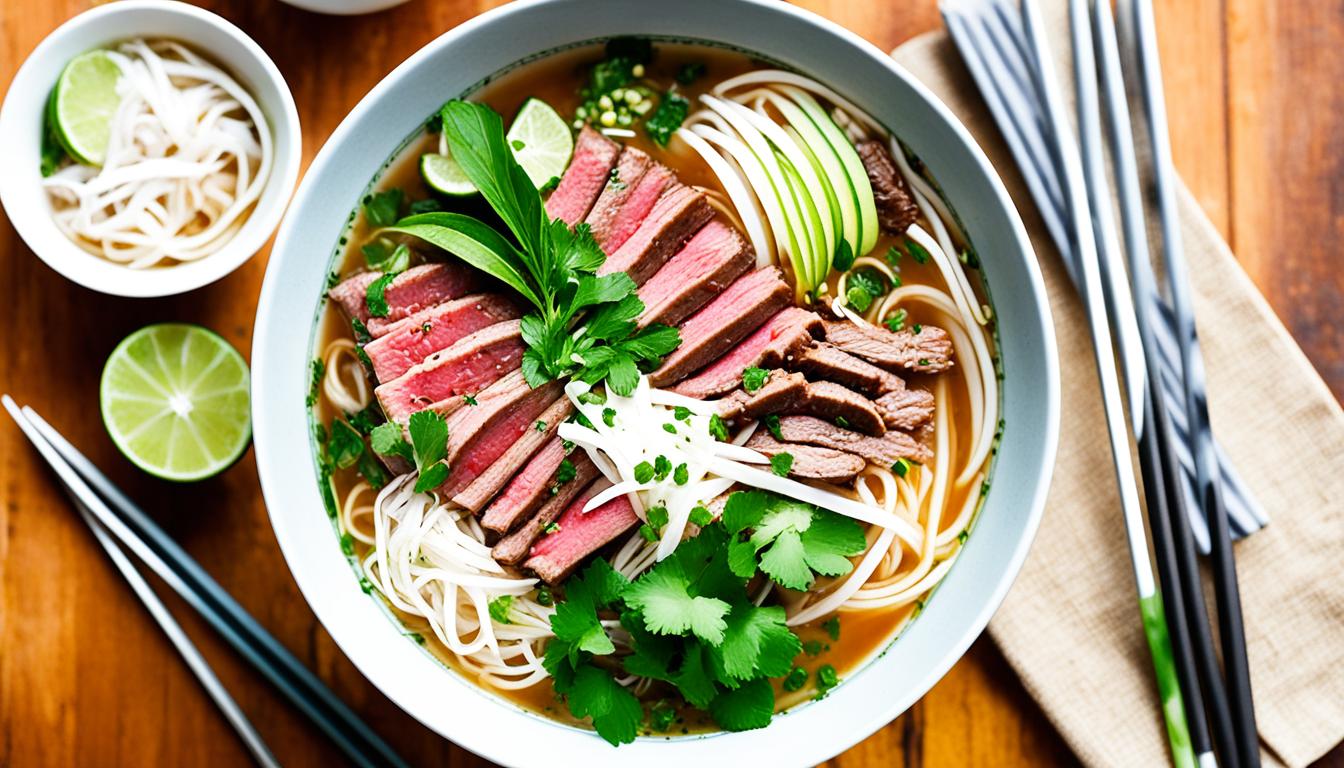
The traditional pho beef is a favorite, with tender steak or brisket that blends well with the broth. For something lighter, pho chicken is a great choice. And if you want no meat, the vegetarian pho lets you enjoy the broth and noodles without the pho protein. No matter what pho meat you choose, make sure it’s cooked just right and fits well with the dish.
Pho is great because you can make it your own, no matter what you like. Try different pho protein choices, like the classic pho beef, the delicious pho chicken, or the fulfilling vegetarian pho. See how each pho meat changes the dish, making it even better with its unique flavors and textures.
Global Cuisine: Pho’s Worldwide Popularity
Pho, a beloved Vietnamese noodle soup, has gone beyond its roots. It has won over people’s hearts and taste buds worldwide. Its unique smell and flavors have made it a favorite globally, adding to the world’s food culture.
Pho has moved from Hanoi’s streets to cities like New York, London, and Tokyo. Now, it’s enjoyed by food lovers everywhere. Its popularity shows how well it combines tradition and new tastes, reaching people across the globe.
Pho’s trip around the world is an amazing story. It has changed and grown with local tastes but kept its true spirit. This has made pho a symbol of Vietnamese culture and traditions worldwide.
Assembling the Pho Bowl
Making a delicious pho bowl is like an art. It’s all about layering ingredients to get the right mix of flavors and textures. From the aromatic broth to the tender meat and fresh garnishes, the secret is in the assembly process.
Layering the Flavors: A Step-by-Step Guide
Begin by pouring hot, fragrant broth into a big bowl. Make sure it’s piping hot and ready to warm your soul. Then, add the cooked rice noodles on top, letting them soak in the rich broth.
Pho layering is key here. The noodles are the base for the other ingredients.
Next, add the main attraction – the protein. Whether it’s beef, chicken, or a vegetarian option, arrange it nicely in the bowl. This should make your pho look inviting.
Finally, add fresh garnishes like thinly sliced onions, herbs, and a squeeze of lime or lemon. These add flavor and texture to your pho bowl assembly. Feel free to try different garnishes to find your favorite pho serving style.

With each layer added, you’ll have a beautiful and tasty pho bowl. It will show off the perfect mix of flavors and textures that make pho so popular worldwide.
Exploring Regional Variations
Vietnamese pho is a dish loved across the country. But it’s not just one recipe. Each region has its own twist, making pho a diverse dish. Let’s dive into the regional variations that make pho so special.
In the north, pho has a rich, slow-cooked broth. The noodles are thin, and beef is a common choice. In the south, the broth is sweeter, and the noodles are wider. You’ll find chicken and seafood options too.
Down in the Mekong Delta, pho gets a unique touch. The broth is full of exotic spices, and you might find fish or shellfish in it. This shows the area’s rich waterways and varied tastes.
It’s not just the broth and noodles that change. The toppings and sauces vary too. The north loves fish sauce and fresh herbs. The south goes for colorful veggies and sauces.
Trying different pho styles is a great way to experience Vietnamese food. Whether you like the hearty north or the zesty south, pho has something for everyone.
Garnishing with Flair
Improving your pho is more than just about the broth and noodles. The fresh herbs, crunchy veggies, and tasty condiments you add make a big difference. Learn about the best pho garnishes and how to arrange them for a beautiful and delicious look.
Fresh Herbs and Condiments: Elevating Your Pho Experience
No pho is complete without fresh herbs like cilantro, Thai basil, and mint. Thinly sliced onions, bean sprouts, and lime wedges add crunch and a zesty kick. You can also add Sriracha, hoisin sauce, and chili-garlic sauce to make it your own.
Be careful when arranging these garnishes. Layer them to make your pho look great. Put the herbs on top, letting their colors pop. Place lime wedges and chili-garlic sauce around the edges for guests to add to their meal. With these garnishes, you’ll make your pho dining experience unforgettable.