Start a culinary adventure and learn how to make Korean BBQ at home. This food is loved around the world for its rich history and cultural importance. It’s known for its tender meats and a variety of tasty side dishes.
This guide will cover the key ingredients, marinades, and grilling methods for Korean BBQ. It’s perfect for both experienced cooks and those new to global cuisine. You’ll get the skills to make Korean BBQ at home and wow your loved ones with your cooking.
Unlocking the Flavors of Korean Barbecue
Korean barbecue, or ‘Galbi,’ has a deep history that spans generations. It’s a key part of Korean food culture. Family gatherings and sharing meals are big traditions here.
Exploring the History and Cultural Significance
The roots of Korean barbecue go way back to ancient times. Nomadic tribes would grill meats over open fires. Over time, the way they cooked and the flavors they used got better. Now, Korean barbecue is a symbol of national pride.
It shows off Korea’s culinary heritage and the strong bonds formed over meals.
Essential Ingredients for Authentic Flavors
Authentic Korean barbecue relies on special ingredients. Meats like beef bulgogi and spicy pork are marinated just right. Sauces and side dishes add to the flavor.
Seasonings like soy sauce, brown sugar, and ginger make the taste savory-sweet. Korean chili paste, or gochujang, adds a spicy kick.
Learning about Korean barbecue’s history and key ingredients helps you understand its true essence. You can then bring these Korean flavors into your own kitchen.
Preparing the Grill: Tips for Perfect Sizzle
Mastering Korean BBQ grilling begins with setting up your grill right. You need to adjust the temperature, fuel, and grill placement for that perfect sizzle. Whether you’re using a classic charcoal grill or a modern gas one, these tips will help you bring out the true flavors of Korean BBQ grilling.

First, think about the fuel you’ll use. Charcoal grills give a smoky flavor, while gas grills offer precise temperature control. Choose what suits you best and preheat the grill to 400-450°F (200-230°C) for searing Korean BBQ meats.
How you place the grill grates is key. Putting them near the heat source gets a high-heat sear. A bit higher up allows for even cooking and highlights grilling techniques. Try different setups to get the char and caramelization you want.
Mastering BBQ grill setup leads to amazing results, just like in global cuisine Korean BBQ. Get ready for a sizzling culinary adventure!
Marinating Masterpieces: Korean BBQ Marinades
Discover the secrets of delicious Korean BBQ through marinating. At the core of Korean barbecue is the marinade. It’s a mix of flavors that turns simple meats into amazing dishes. Let’s explore two key marinades: the classic bulgogi and the spicy gochujang.
Classic Bulgogi Marinade
The bulgogi marinade is key to Korean BBQ. It’s a mix of soy sauce, brown sugar, sesame oil, and garlic and ginger. These ingredients create a flavor that goes deep into the meat. Letting beef or pork marinate for a few hours makes it tender and full of umami.
Spicy Gochujang Marinade
If you want a bold, spicy taste, try the gochujang marinade. Gochujang, a Korean chili paste, is the main ingredient. It’s mixed with soy sauce, honey, and sesame oil. This marinade adds a spicy-sweet flavor that enhances the meat’s taste.
Choosing a marinade is crucial for great Korean BBQ. Get ready for a flavor adventure that feels like a trip to Seoul’s streets.
Global Cuisine: Embracing Korean BBQ Traditions
Korean barbecue has become a beloved part of the world’s food scene. It draws in food lovers with its deep flavors and rich culture. This way of eating brings people together, making meals a time to enjoy grilling and sharing great food.
At the core of Korean BBQ is a love for cooking and being together. The act of making, grilling, and sharing food shows the lasting traditions of Korean cuisine. As more people seek out real cultural experiences, Korean BBQ is becoming a way to dive into Korean food culture.
By exploring Korean BBQ traditions, people from different backgrounds can go on a food adventure. They get to enjoy the mix of flavors, the bond of eating together, and the common love for good food. Whether you’re an expert griller or just starting out, trying Korean barbecue lets you discover new tastes and appreciate the rich variety of global cuisine.
Grilling Techniques for Juicy Perfection
Learning Korean BBQ grilling is a journey of flavor discovery. To get juicy, mouthwatering results, focus on temperature control and timing. Discover the key techniques that will improve your Korean BBQ grilling.
Temperature Control and Timing
Getting the grill temperature right is key for Korean BBQ. High heat seals the meat, caramelizing sugars and keeping juices in. Begin with a super hot grill, then adjust the heat to keep that perfect sizzle. This prevents the meat from drying out.
Timing is also crucial. Cook the meat for the right amount of time to get the doneness you want, from tender to charred. By balancing heat and timing, you’ll make your Korean BBQ taste authentic, with that perfect char and juicy texture. These grilling tips will make your global dishes burst with flavor.
Banchan: Complementary Side Dishes
Korean BBQ is a full experience, and it’s not complete without the colorful side dishes called banchan. These small plates make the meal look great and bring out the best in the grilled meats. They add different textures and tastes.
Kimchi and Beyond
Kimchi is at the core of Korean banchan. It’s a fermented vegetable dish that’s a big part of Korean food. You can find spicy cabbage kimchi or milder radish kimchi, each adding a burst of flavor to the BBQ meats.
But there’s more to Korean banchan than just kimchi. You’ll find crisp, marinated cucumbers, sautéed spinach with garlic, sweet soybean sprouts, and dried seaweed. Each dish brings its own special taste to the table.
These side dishes are key to the Korean BBQ experience. They don’t just add to the meal; they’re a big part of it. They help create a balance of flavors and textures that’s truly Korean.
Trying different banchan is a great way to explore Korean cooking and culture. Whether you love Korean BBQ or are new to it, these dishes will amaze you. They’ll make you want to try more.

Sauces and Condiments: Elevating Flavors
Exploring Korean barbecue means diving into the world of tasty sauces and condiments. Ssamjang and gochujang are key to making your BBQ experience special. These sauces add depth to your grilled meats.
Ssamjang: The Savory Sidekick
Ssamjang is a must-have for Korean BBQ, a thick paste that’s both savory and perfect for your grilled dishes. It’s made with doenjang (fermented soybean paste), gochujang (Korean chili paste), garlic, scallions, and sesame oil. Use it on lettuce leaves or as a dip for your BBQ meats.
Gochujang: The Spicy Sensation
Gochujang is a key ingredient in Korean cooking, especially for BBQ. It’s fermented and has sweet, savory, and spicy flavors. Mix it with honey, rice vinegar, and sesame oil for a sauce that goes great with your BBQ.
Learning to use these Korean BBQ sauces and condiments will take your cooking to the next level. It’s a great way to enjoy the vibrant tastes of Korean cuisine and get closer to an authentic Korean BBQ experience.
Presentation and Serving Korean BBQ
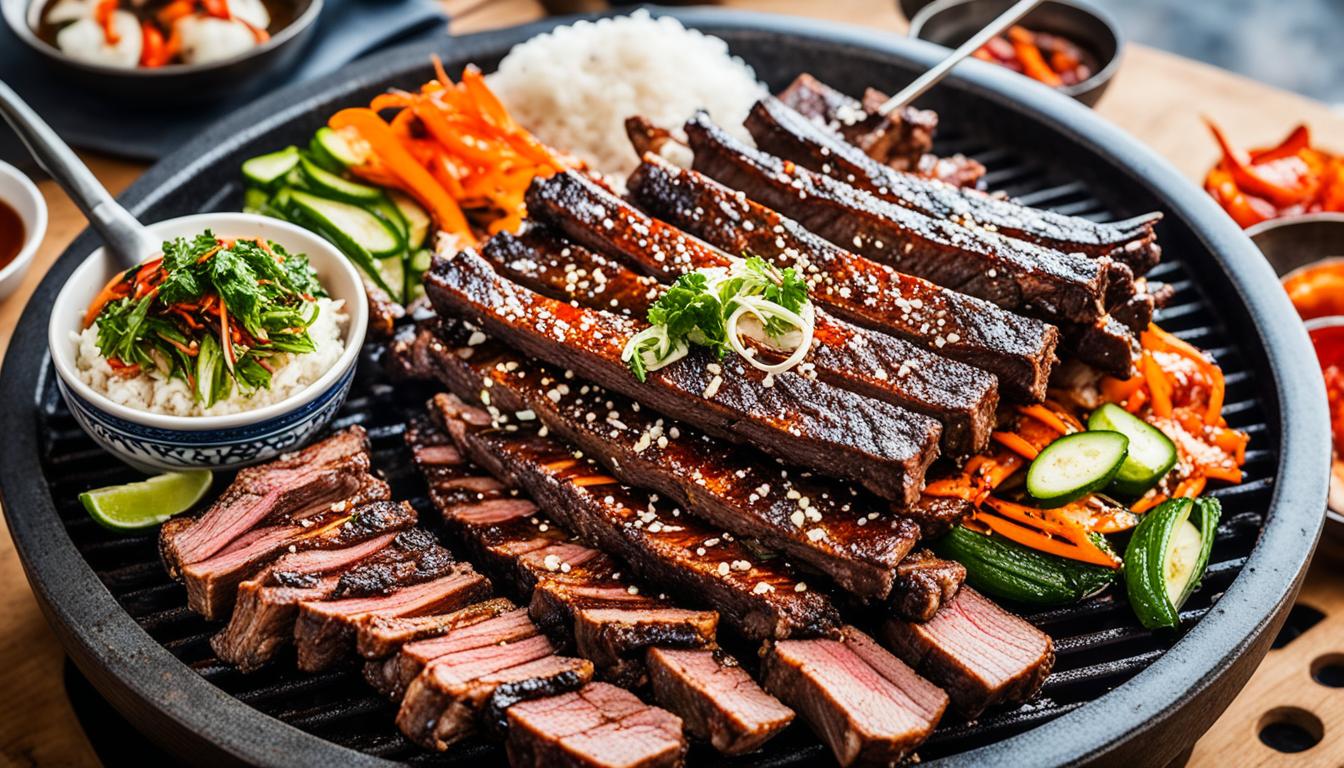
Make your Korean BBQ stand out by perfecting how you present and serve it. Arrange your grilled meats, side dishes, and sauces in a way that looks traditional and inviting. Add interactive parts to make your guests feel like they’re part of Korean barbecue culture. This creates a fun atmosphere that brings everyone closer together.
Start by placing your grilled meats on a big platter. Make sure they’re neatly arranged and easy for everyone to grab. Put the meats next to a variety of colorful banchan, like kimchi, pickled veggies, and sautéed greens. Don’t forget to have small bowls of dipping sauces like ssamjang and gochujang ready for your guests.
Encourage your guests to get hands-on with the food by letting them wrap the meats in crisp lettuce leaves, a traditional Korean way called ssam. This lets them create their own tasty bites. They mix the tender meat, crunchy veggies, and rich sauces together for a unique and unforgettable meal.