Sushi is a global favorite, blending amazing flavors, precise techniques, and deep cultural roots. This guide will share the secrets to becoming a sushi master. It’s perfect for sushi enthusiasts or those dreaming of being a sushi chef. You’ll learn about the key tools, ingredients, and techniques needed to make delicious sushi at home.
Embrace the Traditions of Global Cuisine: Sushi Making
The art of sushi making is deeply rooted in Japanese culture, going back centuries. It started as a way to keep fresh fish edible, turning into the delicate dish we love today. Now, sushi is loved worldwide, showing its global appeal and cultural importance.
History and Cultural Significance
Sushi’s story begins in the 8th century, first noted in Japanese texts. It was a method to preserve fish, giving it a unique taste. Over time, making sushi better, using fresh ingredients became key. Today, sushi is a big part of Japanese culture, showing respect for nature and craftsmanship.
Sushi Etiquette: Respecting the Art
Sushi is more than food; it’s a cultural experience. It’s important to follow etiquette to honor the tradition and the chef. This means handling sushi carefully, using chopsticks right, and enjoying each piece’s taste and look. By respecting sushi’s traditions, diners dive deep into its global culture and understand its history.
Essential Tools for the Aspiring Sushi Chef
Becoming a skilled sushi chef is more than just a hobby. It takes the right tools. You need high-quality sushi knives and specialized sushi rice cookers. These tools are key for making authentic, tasty sushi at home.
At the core of a sushi chef’s tools are the sushi knives. You need sharp blades for slicing fish and veggies easily. Look for knives with a sharp edge and a handle that feels good in your hand. A strong sushi cutting board is also crucial for preparing ingredients carefully.

There are more tools that can improve your sushi-making skills. Tools like rolling mats and rice cookers are important. Makisu, or rolling mats, help you make perfect rolls. A sushi rice cooker makes sure your rice is always right.
With the right tools, you can make sushi like a pro at home. You’ll be ready to explore sushi-making with confidence. The essential tools will help you craft sushi that rivals what you find in restaurants.
Mastering the Basics: Sushi Rice Preparation
Perfect sushi rice is at the core of every great sushi dish. For those wanting to make delicious and authentic sushi, learning how to prepare sushi rice is key. We’ll show you how to pick the right rice and cook and season it for the best taste and texture.
Selecting the Right Rice
Start with the right type of Japanese short-grain rice for sushi. This rice is sticky and slightly sweet, making it perfect for sushi. Choose grains that are plump, shiny, and clean. The best rice takes on flavors well, making your seasoning efforts successful.
Cooking Techniques for Perfect Sushi Rice
Getting the sushi rice right means balancing cooking and seasoning. First, rinse the rice to remove starch. Then, cook it with the right water ratio and simmer time for perfect grains. After cooking, mix in the sushi rice vinegar, sugar, and salt. Fold everything together to spread the flavors evenly and get the right texture.
Mastering sushi rice selection and cooking sets the stage for making sushi that wows your guests. It takes your food to a new level of taste and experience.
Explore the World of Sushi Ingredients
Sushi is famous for its focus on fresh and high-quality ingredients, especially the seafood. For sushi lovers, knowing the wide variety of ingredients is key. Each part, from the sushi fish to the vegetables and toppings, is crucial for a great sushi taste.
Fresh Fish: A Sushi Chef’s Best Friend
The key to a top sushi dish is the freshest sushi fish. Sushi chefs are experts at picking the best seafood for sashimi. They make sure each piece of tuna, salmon, or yellowtail is perfect.
The world of sushi fish is huge, with many types that taste and feel different. You can find everything from rich fatty tuna to sweet shrimp.
But it’s not just the fish. Sushi also includes many vegetables, toppings, and condiments. These add flavor and make each bite special. From crisp cucumber to tangy pickled ginger, they all work together to make sushi amazing.
The Art of Sushi Rolling and Shaping
Learning to roll sushi is key to becoming a great sushi chef. You’ll need to know how to make both thin and thick rolls. These skills are vital for making sushi that looks good and tastes great.
Hosomaki (Thin Rolls)
Hosomaki are thin sushi rolls that show off a chef’s skill. They are made by layering ingredients carefully and then rolling them in seaweed. This makes a roll that’s neat and shows off the flavors inside.
Futomaki (Thick Rolls)
Futomaki are the big, filling rolls. They can have many ingredients like veggies, proteins, and cooked foods. Making these rolls takes skill to balance the flavors and keep them together.
Whether you’re making thin or thick rolls, getting good at rolling and shaping is important. It helps you make sushi that looks and tastes amazing. With practice, you can make sushi that’s both beautiful and delicious.
Nigiri Sushi: A Classic Favorite
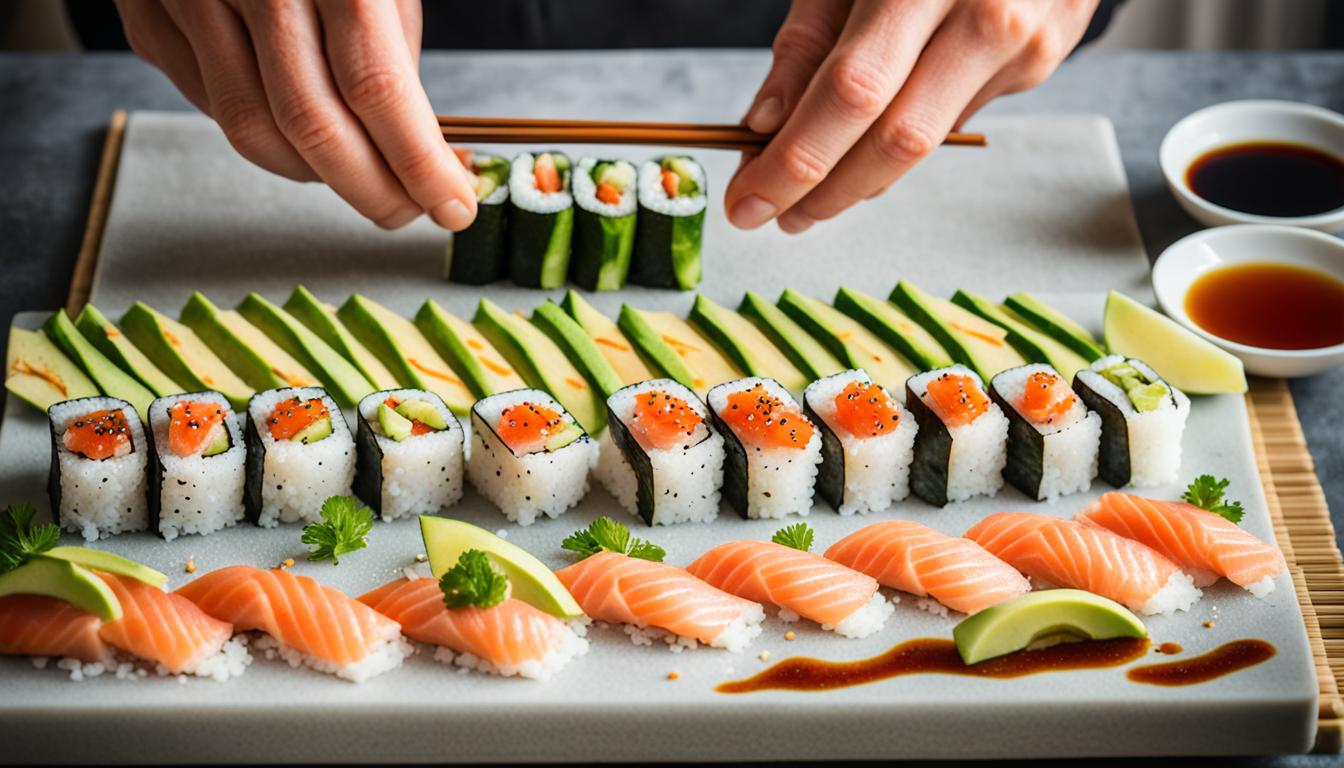
Nigiri sushi is a classic type of sushi with fresh fish on top of seasoned rice. It’s a key part of traditional sushi. Making perfect nigiri sushi takes skill, focus, and knowing how the fish, rice, and flavors work together.
Choosing the best, freshest fish is crucial for nigiri sushi. Sushi chefs pick their seafood with care. They make sure each piece is top quality and matches well with the seasoned sushi rice. The rice is prepared with great care and shaped into small pillows for the fish.

The art of nigiri sushi is in its shape and look. Sushi chefs press the rice into shape with their hands. They aim for a balance between the rice’s softness and the fish’s tender texture. The fish is then placed on top in a way that looks beautiful.
Enjoying nigiri sushi, like a tuna or salmon nigiri, takes you to the heart of Japanese food. With each bite, you’ll see the hard work and skill behind this classic dish.
Global Cuisine: Sushi Fusion and Creativity
Sushi has become a global favorite, loved by food lovers everywhere. Chefs around the world are mixing traditional sushi with new ingredients and tastes. This makes sushi a global culinary adventure.
In New York City and Sydney, sushi chefs are getting creative. They use tropical fruits and spicy seasonings to make sushi that’s a mix of cultures and tastes. These new sushi dishes are exciting and show how sushi has become a global food.
Today, sushi is more popular than ever, with people wanting new and exciting sushi experiences. This section is for anyone who loves sushi or is just getting into it. It’s about exploring the endless possibilities of sushi fusion and creativity. Get ready for a food journey that brings together different cultures and celebrates the beauty of sushi.
Plating and Presentation: Elevating the Sushi Experience
The art of sushi goes beyond just making it and tasting it. It’s also about how you present it. Making your homemade sushi look amazing can make the whole experience better.
Garnishing and Decorating Sushi
Make your sushi plates stand out with creative garnishes and decorations. Use fresh veggies like radishes or carrots in fun shapes for color. Add shiso leaves or nori strips around your sushi rolls.
Try drizzling sauces in patterns or use edible flowers for a natural look. The aim is to make it look good and taste great.
Good plating and presentation show off your sushi skills. They make the experience enjoyable for both taste and sight. By decorating your sushi well, you’ll make it a memorable dish for your guests.