
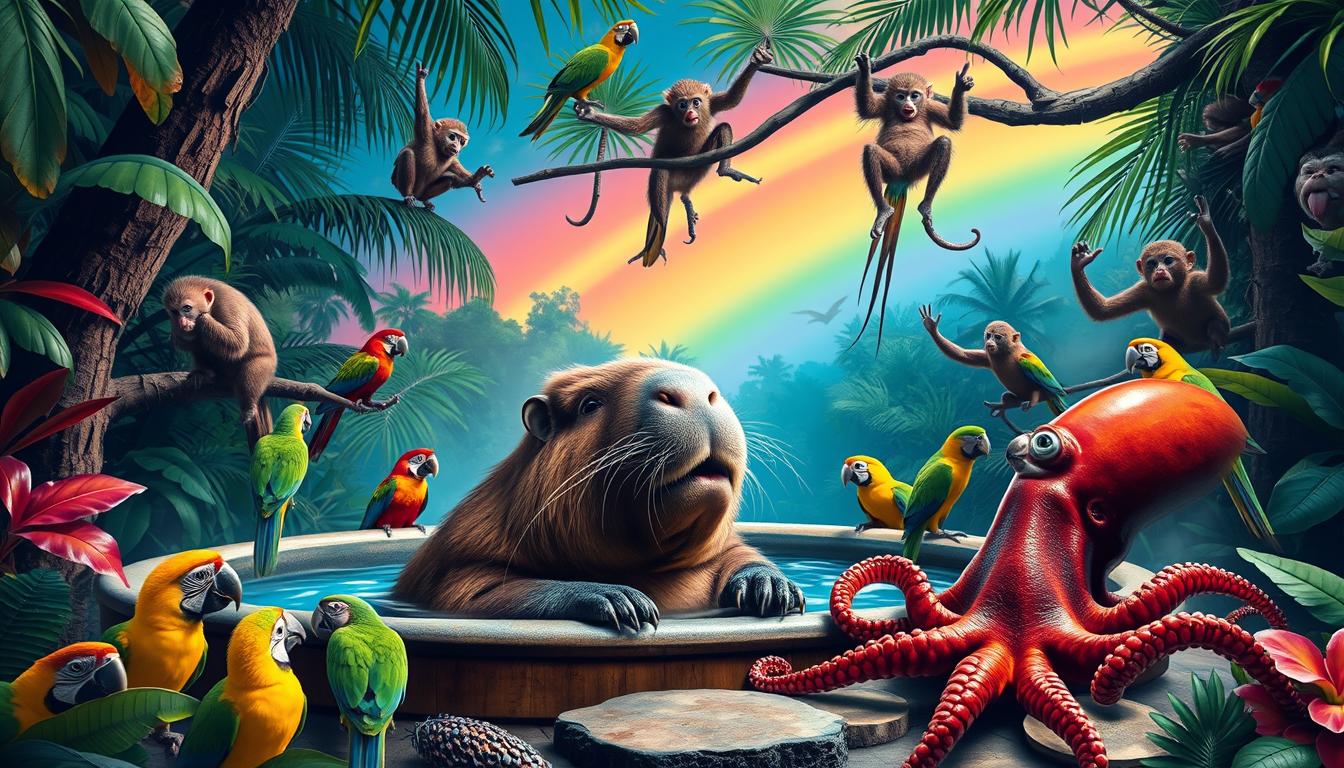
The animal kingdom is full of weird behaviors that amaze us. Animals have complex social lives and special ways to survive in their homes. These behaviors make the natural world fascinating.
We’ll look at many strange animal behaviors, like odd mating rituals and weird diets. By studying these, we learn about animal and environment relationships. This journey of discovery teaches us about the animal kingdom and inspires us.
Introduction: The Fascination of Bizarre Animal Behaviors
Our curiosity about the world around us makes us fascinated by strange animal behaviors. By studying these behaviors, we learn about the complex lives of different species in nature. This knowledge helps us in conservation and deepens our understanding of zoology.
Exploring animal behaviors shows us how species interact with their environments. The study of zoology shows the amazing variety of life on Earth. It teaches us why conservation is key to protecting our planet’s nature.
The study of nature, conservation, and zoology is both rich and fascinating. As we learn more about species and their habitats, we see why we must protect the natural world. By being curious and understanding our world, we can create a better future for all living things.
As we explore the fascinating world of animal behaviors, we are reminded of the importance of preserving the natural world and the need for ongoing conservation efforts to protect our planet’s precious nature.
Odd Mating Rituals in the Animal Kingdom
Animal mating rituals are truly fascinating. Each species has its own courtship behaviors to find a mate. These behaviors are key to the survival and diversity of species. They also show us why wildlife conservation is so important.
In the animal world, courtship behaviors range from simple to complex. For instance, the peacock’s bright tail feathers are a classic example. Some birds even sing and dance to attract a mate and show off their territory.

Studying animal mating rituals helps us understand the need to protect natural habitats. This knowledge guides wildlife conservation efforts. It also helps us see why preserving biodiversity and ecosystem health is vital.
As we learn more about animal mating rituals, we see the need to protect our natural world.
The study of animal mating rituals and courtship behaviors is key to wildlife conservation. It gives us insights into animal social behaviors. By preserving habitats and ecosystems, we protect endangered species and the diversity of life on Earth.
Animals That Use Tools Like Humans
Studies of animal tool use show amazing problem-solving skills in nature. Animals like primates use sticks to get termites, and birds use rocks to open shells. These actions show their smart thinking and adaptability, much like humans.
Animals using tools is a great example of problem-solving. It shows they understand cause and effect and can learn. Sea otters crack open shells with rocks, and chimpanzees use sticks to get food from hard spots. These actions show how animals can solve complex problems.
Looking into animal tool use helps us understand how problem-solving skills evolved. By studying how animals use tools, we learn more about their thinking. This knowledge helps us understand human cognitive abilities and how we use tools too.
Exploring the natural world shows us animals’ amazing cognitive abilities and problem-solving skills. Their tool use is a great example of their complex interactions with their environment.
Unexpected Social Behaviors of Animals
Animal social behaviors are truly fascinating. Many species show complex and intriguing interactions. These behaviors are key to their survival and success. Cooperation is a big part of this, helping individuals work together.
In the animal world, group dynamics are seen in many ways. Like wolf packs’ hierarchical structures or some birds’ cooperative breeding. These social behaviors help individuals thrive by promoting cooperation and mutual support.

Research shows that animals like dolphins and elephants have advanced social behaviors. These are vital to their social structures. They show cooperation and reciprocity, helping build strong bonds and achieve goals together.
By examining the complex social behaviors of animals, we can gain a deeper understanding of the importance of group dynamics and cooperation in the natural world.
As we explore animal social behaviors, we might find more surprising examples of cooperation and group dynamics. By studying these, we can appreciate the animal kingdom’s social structures. We’ll see how animal social behaviors shape our world.
Strange Eating Habits in Nature
Animal feeding behaviors are as varied as the species on our planet. Birds have complex foraging strategies, while mammals have unique nutrition needs. The animal kingdom is full of strange and fascinating eating habits.
For instance, filter-feeding whales use their baleen plates to catch tiny organisms from the water. Vampire bats have adapted to drink the blood of other animals. These behaviors show how adaptable and diverse life on Earth is.
Studying these strange eating habits helps us appreciate the complex web of life. The variety of animal feeding behaviors and foraging strategies is awe-inspiring. As we learn more about these creatures, we might discover even more surprising examples.
The natural world is full of mysteries waiting to be uncovered, and the strange eating habits of animals are just one example of the fascinating diversity of life on Earth.
Bizarre Survival Strategies
Animal survival strategies are truly fascinating. Different species have unique ways to deal with their environments. These adaptations help them survive in extreme places, like the cold tundra or hot deserts. Evolution has helped animals develop amazing traits for survival.
One cool example is some frogs that can survive freezing temperatures. They freeze their bodies in winter and thaw out when it gets warmer. This shows how diverse animal survival strategies can be.

Studying evolution and adaptations helps us understand animals and their environments. It shows how animals adapt to their surroundings. This knowledge helps protect endangered species and keeps ecosystems balanced.
Exploring the natural world shows us the amazing complexity of animal survival strategies. From simple to complex species, each has unique adaptations. Studying these strategies gives us a peek into the web of life, showing animals’ incredible resilience and adaptability.
Animals with Uncommon Sleeping Patterns
When it comes to animal sleep patterns, there’s a wide range of unique behaviors. Some animals, like dolphins, take multiple short naps throughout the day. This lets them rest while staying alert to their surroundings, which is key for their survival.
Birds sleep differently, with one half of their brain resting while the other stays awake. This lets them quickly spot predators and fly away if needed. Their sleep patterns are controlled by an internal clock that responds to light and darkness.
Understanding these animal sleep patterns gives us insights into the natural world. By studying these unique behaviors, we appreciate the diversity and adaptability of life on Earth. As we explore animal behaviors, we might find even more surprising examples of how animal sleep patterns have evolved.
Studying animal sleep patterns can help us better understand the complex relationships between sleep, environment, and survival. It shows how these factors have shaped the evolution of life on Earth.
Unique Communication Methods
Animal communication is key to their social behavior. It lets them share info and work together. Birds sing complex songs, and bees dance in patterns. These ways of talking are vital for their survival. Language is not just for humans; many animals have their own ways to communicate.
In the animal world, how well they talk affects their social lives. Birds sing to mark their territory and find mates. They also warn others of dangers with their voices. The study of animal communication shows us many interesting ways animals talk to each other.

Looking at how animals communicate helps us understand their social lives better. Wolves hunt together, and primates have complex social orders. Animal communication is essential for their survival. By studying these ways of talking, we learn more about the complex nature of language in animals.
Exploring how different species communicate shows us the amazing diversity of life. By embracing this diversity and learning from nature, we can appreciate the complex web of life around us.
Peculiar Parenting Techniques
Animal parenting is truly fascinating, with different species showing unique ways to care for their young. From birds to mammals, each has its own method to help their offspring grow and survive. Parental care is key in animal parenting, as it greatly affects the growth and survival of the young.
In the animal world, offspring development is shaped by the care they receive. For example, some bird species brood their eggs, sitting on them to keep them warm. Others leave their eggs alone. This shows how varied animal parenting can be and its impact on young ones.
Research has found that many things can influence how animals parent. For instance, wolves are known for their deep parental care. Both parents help raise their pups. This kind of animal parenting is vital for the young’s survival and growth. It shows how important care from parents is in the animal kingdom.
Understanding animal parenting techniques can provide valuable insights into the complex social behaviors of animals and their strategies for ensuring the survival and development of their offspring.
In conclusion, animal parenting is diverse and intriguing, with each species having its own way to care for its young. By studying these methods, we can learn more about animal social behaviors and the role of parental care in the animal world.
Animal Mimicry and Its Odd Outcomes
Animal mimicry is a cool phenomenon where one species copies another for survival. This trick helps them avoid predators, attract prey, or trick rivals. Camouflage is a big part of this, letting them hide in plain sight.
One cool example is how some frogs look like poisonous ones. They copy the bright colors and patterns of these frogs to scare off predators. This trick, combined with camouflage, keeps them safe and hidden.
Animal mimicry can also be used for deception. For instance, some birds mimic other birds’ calls to get food or steal it. This shows how clever and adaptable species can be in nature.
Animal mimicry is a remarkable example of the creative and often humorous outcomes of these behaviors, highlighting the importance of camouflage and deception in the natural world.
Conclusion: Embracing the Weirdness of Nature
The animal behaviors in this article show the amazing diversity of nature. By accepting the weirdness of nature, we learn to appreciate the complex web of life. These animals teach us that the natural world is full of wonders.
Studying these strange behaviors highlights the importance of biodiversity. Protecting their habitats is key to keeping our ecosystems balanced. This way, future generations can enjoy the incredible variety of life on Earth.
Exploring the weirdness of nature inspires us to see the world with awe. By valuing the extraordinary, we connect more deeply with nature. This connection makes us better caretakers of our planet.